The Five Minute Journal Review: A Structured Way to Make Gratitude an Actual Habit
Why the format of a gratitude practice — not just the intention behind it — determines whether it survives past the first week.
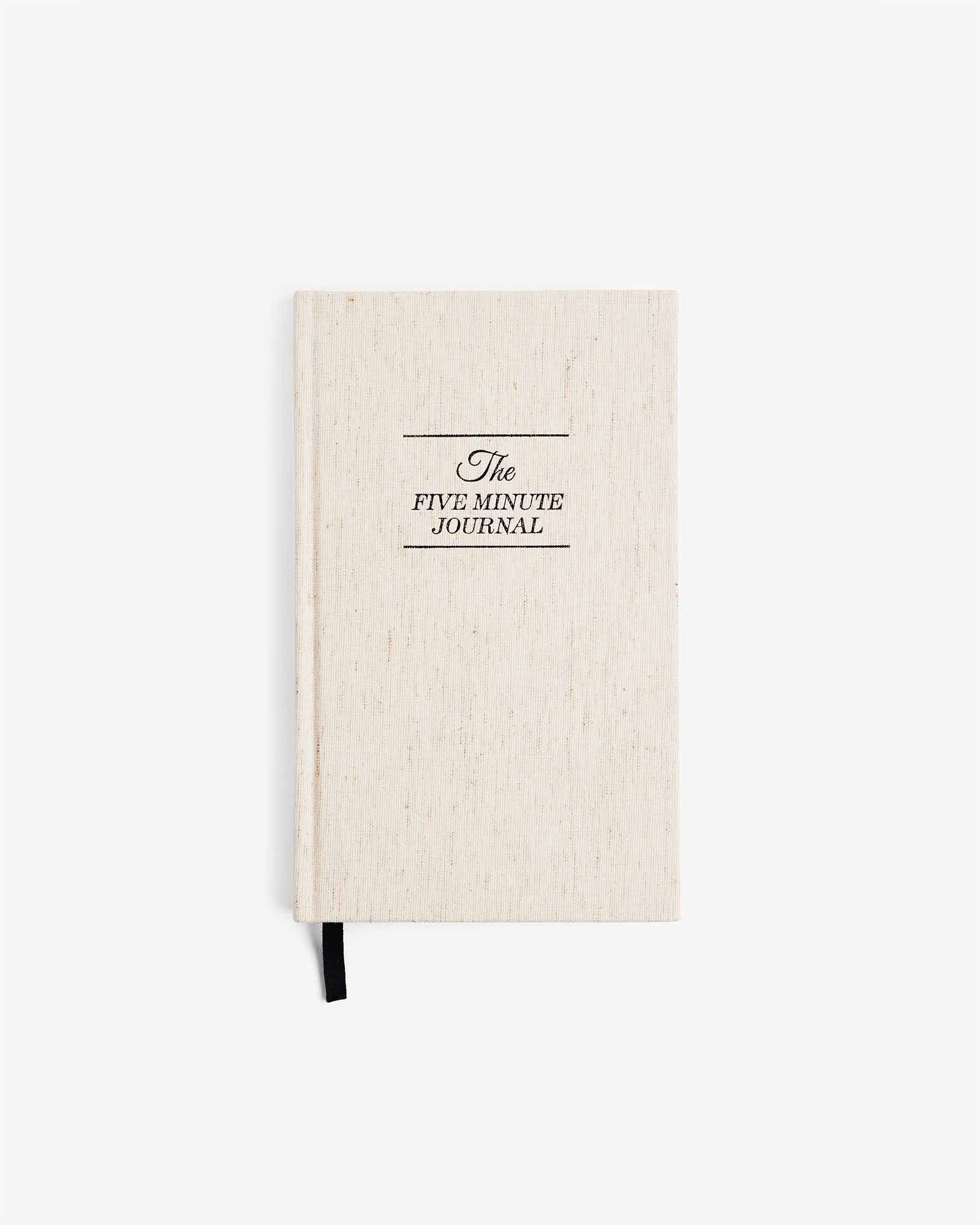
The Five Minute Journal (Intelligent Change)
Image © Intelligent Change — Used for editorial review purposes
| Type | Undated guided gratitude journal, morning + evening entries |
| Structure | 3 gratitudes, 1 intention, 1 affirmation (AM) · 3 good things, 1 lesson (PM) |
| Length | Undated — approx. 6 months of daily entries |
| Format | Hardcover, lay-flat binding |
| Track record | Launched 2013 — over 4 million copies sold worldwide |
| Maker | Intelligent Change (founded 2013) |
Almost everyone who tries gratitude journaling starts the same way: a blank notebook and good intentions. Almost everyone also stops within a couple of weeks, usually not because gratitude stopped mattering, but because staring at an empty page every night quietly turns a five-minute practice into a chore with no clear finish line. The blank page is the actual obstacle far more often than the concept of gratitude itself.
The Five Minute Journal solves a structural problem, not a motivational one — it replaces the blank page with a short, fixed prompt sequence, so the only real decision each day is what to write, not whether or how to start.
The Science Behind It
A randomized controlled trial by Lai & O’Carroll (2017), published in the University of Stirling’s clinical psychology research and reported in Health Psychology Update, tested a structured “Three Good Things” journaling intervention — closely mirroring the evening portion of this journal’s format — against a control group. Participants who kept the structured gratitude practice showed measurable improvements in wellbeing and reductions in depressive symptoms compared to controls, building on the original framework established by positive psychology researchers Robert Emmons and Michael McCullough. What’s notable across this body of research is that the specific, repeatable structure — not open-ended reflection — is what shows up consistently in the data.
This matters because it reframes what a journal like this is actually for. It isn’t a diary, and it isn’t meant to capture everything on your mind. It’s a narrow, deliberately constrained prompt designed to redirect attention toward specific positive details each day — small enough to sustain as a habit, structured enough to survive the days motivation runs low.
Using It Mindfully
The value here comes from specificity, not volume. “Grateful for my family” is technically an answer, but it’s vague enough to write on autopilot. Push one layer deeper — a specific moment, a specific sentence someone said, a specific small thing that went right — and the entry starts requiring actual attention to the day rather than a reflexive, generic response. Keep the journal somewhere it’s physically in the way of your morning coffee or evening wind-down, so filling it out becomes attached to an existing habit rather than one more thing competing for a decision.
Pros & Cons
Pros
- Structured prompts remove the “blank page” barrier that ends most journaling habits early
- Genuinely takes five minutes — a realistic daily ask, not an aspirational one
- Undated format means starting doesn’t require waiting for January or a Monday
- Durable hardcover, lay-flat binding that survives daily handling for months
Cons
- The fixed structure can feel repetitive after several months — some prefer more open-ended journaling long-term
- Priced higher than a plain notebook for what is, physically, a simple bound book
- Only around 6 months of entries per journal, so it’s a recurring purchase for a long-term habit
Who Is This For
Anyone who has tried gratitude journaling with a blank notebook and quietly abandoned it
People building a morning and evening bookend routine around an existing meditation practice
Anyone who values structure and would rather fill in prompts than face open-ended reflection
Why Intelligent Change
Intelligent Change launched the Five Minute Journal in 2013 and is widely credited with starting the modern guided-journaling category that dozens of competitors have since copied. The company describes its products as rooted in positive psychology research rather than generic self-help language, and the journal has sold more than four million copies without significant format changes since launch — a track record that speaks to the format working as intended rather than needing constant revision.
Final Verdict
The Five Minute Journal succeeds by solving the right problem — not motivation, but structure. If gratitude journaling has never stuck before, the fixed five-minute format, backed by real research on structured gratitude practices, gives it a genuinely better chance than another blank notebook would.
Affiliate Disclosure: Buddhism with Maitreya Dharma participates in the Amazon Associates affiliate program. If you purchase through our links, we may earn a small commission at no additional cost to you. This supports our mission to share guided mindfulness meditation and applied Buddhist wisdom freely. We only recommend products we genuinely believe support your well-being and mindful living. All content is independently researched and reflects our honest assessment. Stay Mindful.