
Learning how to be alone with your thoughts sounds like it should be the easy part. No effort, no equipment, nothing but a quiet room. And yet many of us have had the experience of finally getting the quiet we asked for and finding it loud inside. A story more than 2,500 years old, about a monk and a mango grove, explains why.
The monk’s name was Meghiya, and he served as the Buddha’s personal attendant. One morning, after the alms round, he came across a lovely mango grove, peaceful and ideal for meditation, and asked permission to go and sit there alone. The Buddha asked him to wait until another monk could take over his duties. Meghiya asked again, then a third time, and the Buddha agreed. The Meghiya Sutta, preserved in the Udana (Ud 4.1), says what happened next. Meghiya found himself mostly overwhelmed by troubling thoughts: thoughts of craving, of ill will, and of harming others. Instead of peace, he found a mind in disarray, and he walked back to the Buddha to say so.
The details matter. In Thanissaro Bhikkhu’s translation, the grove lay beside the Kimikala River, near the village of Jantu, and Meghiya was troubled again and again by three kinds of thought: sensual desire, ill will, and the urge to harm. What surprised him most was that this happened even though he had left home out of faith. He had done the visible, difficult thing, and it had not been enough on its own. That is a very modern kind of disappointment: we arrange the retreat, the long weekend, or the empty evening, and the mind arrives with its whole crowd.
The Buddha did not scold him. Wanting a quiet place was not the mistake; the mind simply had not been prepared for it yet. Five things, he said, help a mind ripen: good friends who encourage us, a way of living that keeps our own conduct clean, easy access to sobering, wise talk, steady effort to let go of what harms and grow what helps, and a clear eye for how everything arises and passes away. Then he gave four practices for exactly the kinds of thoughts that had swamped Meghiya: looking honestly at the body to loosen craving, cultivating goodwill to ease ill will, following the breath to quiet a scattered mind, and seeing impermanence to loosen the grip of “I.”
TG Minh Thanh, in The Legacy of the Awakened One, draws a practical lesson from the story. Solitude is a good thing, but it cannot simply be wished into being. Without wise friends, he writes, we are like a deer in an empty forest: beautiful, innocent, and easy prey. He compares good company to a long, gentle rain that fills the streams, then the rivers, then the sea, drop by drop. And when we cannot meet a wise friend in person, he notes, a recorded talk or a written guide can serve as one.
It helps to see the four practices as a toolbox with labeled drawers. In the sutta, contemplating the unattractive is offered for strong lust, goodwill for ill will, mindful breathing for a mind that scatters into one thought after another, and the perception of impermanence for the conceit “I am.” Meghiya did not get one cure for every trouble. He got a different tool for each kind of trouble, which is also how a restless mind tends to feel from the inside: sometimes it is irritation, sometimes craving, sometimes simply noise. Of the four, mindful breathing is the one most people can begin with today, because it needs no special setting and no belief.
❈
Modern psychology has found its own version of the mango grove. In 2014, Timothy Wilson of the University of Virginia and colleagues, including researchers at Harvard, published eleven experiments in the journal Science. In the core setup, people sat alone for six to fifteen minutes in a bare room with no phone, no reading, and no pen, and were asked simply to entertain themselves with their thoughts. Most did not enjoy it. In one experiment, people who had said they would pay money to avoid a mild electric shock were given the chance to shock themselves while they waited. Twelve of eighteen men and six of twenty-four women did so at least once. This was a short, unguided exercise in an artificial room, and other researchers have debated how far to read into it. Still, the authors concluded that many people would rather be doing something, even something unpleasant, than be left alone with their thoughts.
The details of that study are worth knowing, because they show both how striking and how limited it was. Participants left their phones and writing materials outside and were asked to stay seated, stay awake, and keep themselves company with their thoughts. In the shock experiment, about two thirds of the men and a quarter of the women shocked themselves, and the authors suggested that men’s higher sensation-seeking probably explained the gap, though they did not test it directly. Most participants were college students, and when some people tried the exercise at home, about a third admitted to cheating by doing something else or getting up. So the finding is not that solitude is torture. It is that an untrained mind, given no task and no preparation, often reaches for almost any stimulus.
Why does an idle mind turn on us this way? A large Harvard study gives a hint. In 2010, psychologists Matthew Killingsworth and Daniel Gilbert published a paper in Science based on an iPhone app that contacted 2,250 volunteers, aged 18 to 88, at random moments. It asked how happy they were, what they were doing, and whether their thoughts were on it. Across about 250,000 responses, people’s minds were somewhere else 46.9 percent of the time, and a wandering mind typically went along with lower happiness. What people were thinking predicted their mood better than what they were doing. The researchers’ time-lag analyses suggested that the wandering came first and the unhappiness followed, but that is a suggestion from the data, not settled proof, and the study sampled moments of ordinary life rather than people sitting alone in a quiet room. Placed beside Meghiya’s mango grove, it is a reminder that a wandering mind is not an empty one. The parallel is ours, not the study’s: the researchers did not measure craving or ill will.
Not every study of solitude is so bleak. In 2018, Thuy-vy Nguyen, Richard Ryan, and Edward Deci reported four studies in Personality and Social Psychology Bulletin. Their results suggest that time alone tends to turn down high-energy emotions, both pleasant and unpleasant, which is not the same as making people unhappy. When people chose to be alone, solitude was linked to relaxation and lower stress, and choosing what to think about also seemed to matter. In the language of the sutta, the difference may be between a mind that has been prepared and one that has simply been left alone.
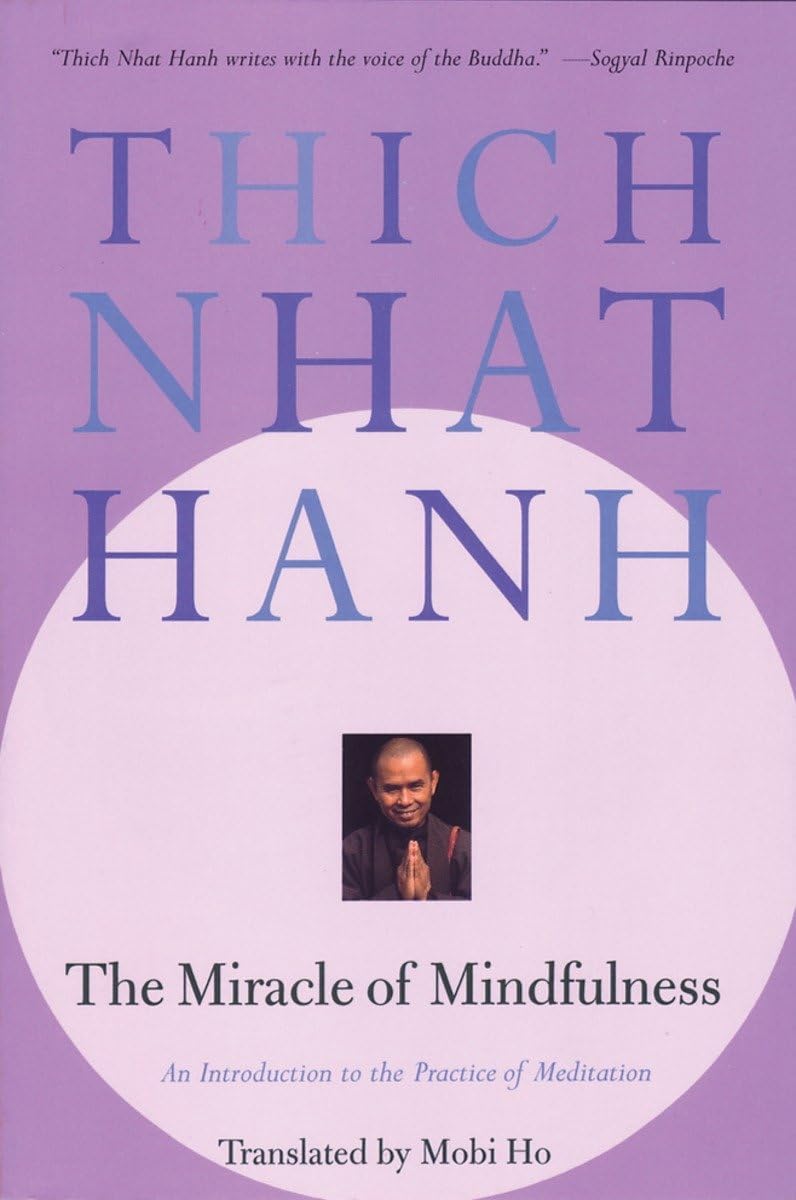
Both stories point the same way. The quiet does not do the work by itself; what we bring into it does. In the sutta, readiness looks surprisingly ordinary: a friend who will tell us honestly how we are doing, a few minutes of mindful breathing, something steadying to listen to. If you are building that foundation, our piece on what a few quiet minutes do for body and mind is a gentle place to start, and Thich Nhat Hanh’s short classic The Miracle of Mindfulness, which we reviewed here, is a clear guide to the breath.
❈
What would it look like to take this seriously on an ordinary Tuesday? The sutta’s five conditions are not exotic: a friend who tells us the truth, a way of living we do not have to feel guilty about, something wise to listen to, steady effort, and an eye for change. Most of them can be built in small pieces. You might begin with five minutes of sitting and following the breath rather than an afternoon of silence. You might choose the time yourself, since the 2018 research suggests that choosing solitude matters. You might keep a short talk or a few pages of a trusted book nearby for the days when your own mind is not good company, and tell a friend what came up afterward. None of this is a prescription; it is one reading of a very old story. The point is that solitude is something we ripen into, not something we simply enter.
❈
Meghiya’s story has no dramatic ending. What is worth noticing is what he did next. He saw that his mind was not ready, and he went back to the person who could help. The next time quiet feels loud, what is the first friend, habit, or breath you could bring along with you?
If this theme speaks to you, our essay on patience with difficult people draws on another chapter of the same book.
A note on this article: “How to Be Alone With Your Thoughts: A Buddhist Lesson” is inspired by and draws lessons from a chapter in The Legacy of the Awakened One (A Practice of Patience) by Vietnamese author TG Minh Thanh, translated from the original Vietnamese. Among the many themes explored across the book, this chapter focuses on why solitude cannot simply be wished into being, and what to prepare before seeking it.
This article is part of the Learn library at Buddhism with Maitreya Dharma, where modern neuroscience and the Buddha’s teachings meet in practical, everyday language — no background in Buddhism required.