Hatch Restore 3 Review: Does a Sunrise Alarm Actually Change How You Wake Up?
For anyone who wakes up to a jarring phone alarm and spends the first groggy hour of the day fighting through it — a screen-free device built to work with your body’s own wake-up signal instead of overriding it.
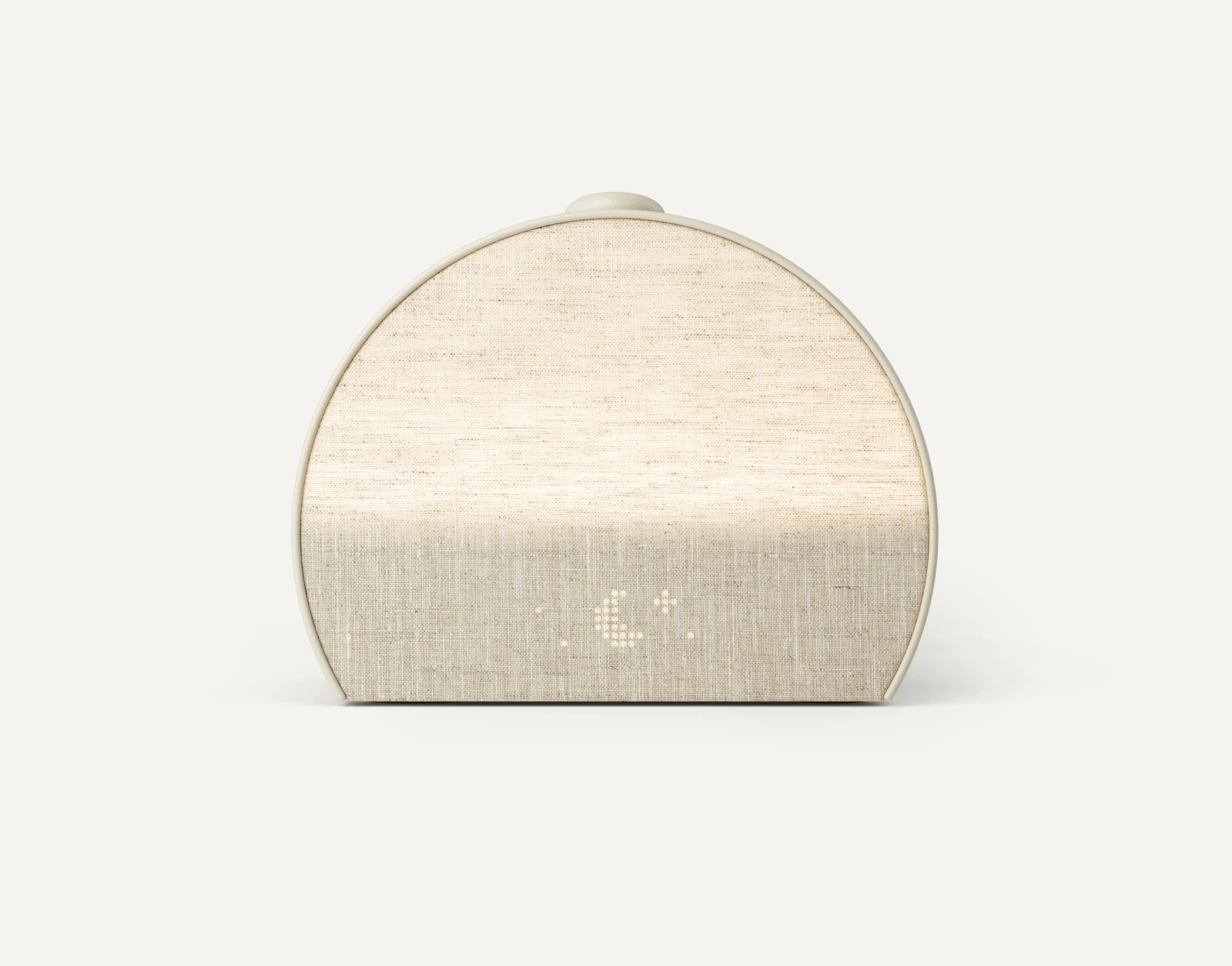
🌅 Hatch Restore 3 — Sunrise Alarm & Sound Machine
Image © Hatch — Used for editorial review purposes
⚡ Quick Specs
| Type | Sunrise alarm + sound machine |
| Sounds | 80+ sounds via Hatch Sleep app |
| Light | Full-color sunrise/sunset simulation |
| Screen | Screen-free design |
| Control | Hatch Sleep app (iOS/Android) |
| Rating | 4.3★ (5,700+ ratings) |
Why Your Wake-Up Signal Matters More Than People Think
Your body’s master clock — the suprachiasmatic nucleus (SCN), a small region of the hypothalamus — reads light through the eyes to decide when to ramp up cortisol, the hormone that brings you to full alertness. A loud alarm doesn’t work with that system; it startles you awake mid-cycle, triggering a stress response rather than the gradual cortisol rise your body is built to run on.
1. What Makes This Different From a Basic Alarm Clock
A phone alarm or a standard digital clock gives your brain exactly one signal: sudden noise. The Restore 3 is built around a second, gentler signal your body already listens for — gradually brightening light — paired with the option to fade in sound rather than blast it. It’s also intentionally screen-free, so the last thing you interact with before bed and the first thing you see in the morning isn’t a backlit display.
2. The Things the Listing Doesn’t Tell You
The sunrise effect is genuinely gradual — some users expect an instant bright light and are initially underwhelmed if they don’t give the full ramp time to work. It also depends entirely on the Hatch Sleep app for full customization; the device is far less useful if you don’t spend a few minutes setting up your routine in the app first. And because it’s a single-purpose sleep device, it won’t replace a smart speaker or smart display — it doesn’t try to.
3. Using It Mindfully
The neuroscience only helps if the habit sticks. Keep the light gradual, not instant — a 20–30 minute sunrise ramp mirrors what the research tested, and skipping straight to full brightness defeats the purpose. Set the wind-down sound too, so the same device conditions your brain that it’s time to slow down, not just wake up. And pair the wake-up itself with one calm action — sit up, take three slow breaths, then reach for your phone, not the other way around.
4. Clinical Evidence & Scientific Backing
The rise in cortisol during the first 30–45 minutes after waking is called the cortisol awakening response (CAR), and it’s directly influenced by light exposure through the SCN pathway. A controlled study by researchers at the University of Westminster found that participants using a gradually brightening dawn simulator showed a meaningfully larger cortisol awakening response than those waking to a standard alarm — roughly a 12–13% increase in the size of that morning cortisol rise (Thorn et al., 2004, Psychoneuroendocrinology). That’s the specific mechanism a sunrise alarm like the Restore 3 is designed to support.
5. Pros & Cons: An Honest Review from the Global Community
Synthesized from thousands of verified Amazon ratings and independent sleep-tech coverage.
👍 The Pros (Benefits)
- Genuinely gentler wake-ups once the sunrise routine is dialed in
- Screen-free design — no backlit display competing with your wind-down routine
- Doubles as a full sound machine, with 80+ sounds for falling asleep, not just waking up
- Easy to use without the app for basic alarm/light functions once initially set up
👎 The Cons (Limitations)
- Full customization requires the app, an extra step compared to a simple clock
- Premium price compared to basic alarm clocks or sound machines bought separately
- Not a smart speaker — no voice assistant, no music streaming beyond Hatch’s own library
6. Who Is It For — and When to Use It?
Best fit: anyone who currently wakes to a jarring phone alarm and keeps a fairly consistent sleep schedule, or wants one device to handle both the wind-down and wake-up ends of the night.
Less ideal fit: anyone who already wakes up naturally with sunlight in the room, or who wants a device that also functions as a smart speaker.
7. Brand Authority & Trustworthiness
Hatch has built its entire product line around sleep-specific hardware rather than general smart-home gadgets, with the Restore line now in its third generation. That focus shows in the details — a screen-free design, a dedicated sleep app, and a sound library built specifically around falling asleep and waking gently, rather than sleep features bolted onto a general-purpose smart speaker.
🌟 Final Verdict: A Wellness Expert’s Perspective
The science behind dawn-simulated waking is real and specific, even if it’s more modest than some marketing implies — expect an easier, less jarring wake-up, not a total transformation.
For the price, the Restore 3 is a well-built, screen-free way to put that research into practice every morning.
Affiliate Disclosure: Buddhism with Maitreya Dharma participates in the Amazon Associates affiliate program. If you purchase through our links, we may earn a small commission at no additional cost to you. This supports our mission to share guided mindfulness meditation and applied Buddhist wisdom freely. All content is independently researched and reflects our honest assessment. Stay Mindful.