Keychron K2 HE Review: Adjustable Actuation Force Meets a Real Fatigue Study
For anyone who notices their hands feel tired by the end of a long typing day — a magnetic-switch keyboard that lets you dial in a lighter keystroke instead of accepting whatever force the manufacturer picked.
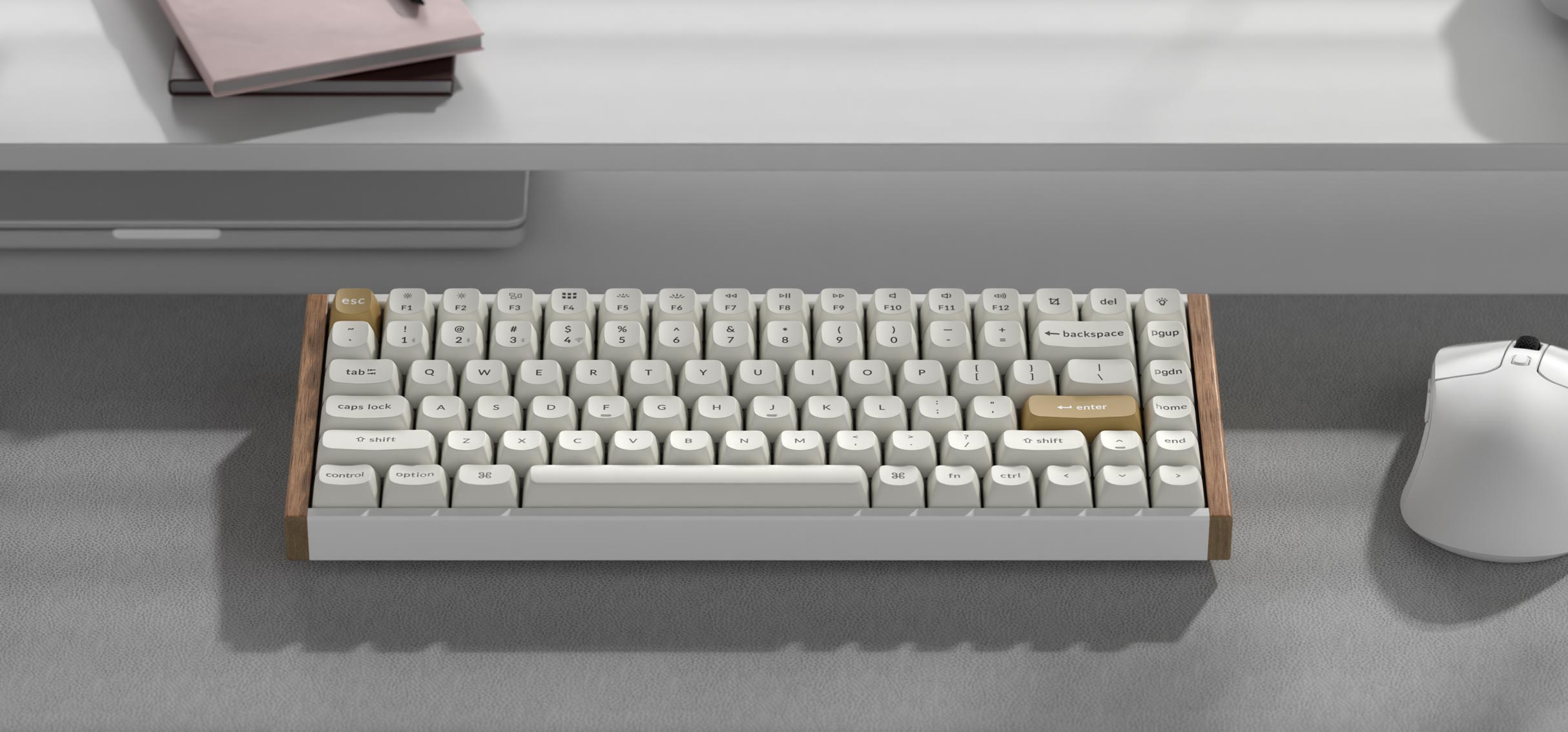
⌨️ Keychron K2 HE — Adjustable Magnetic Switch Keyboard
Image © Keychron — Used for editorial review purposes
⚡ Quick Specs
| Layout | 75% with rosewood siding |
| Switches | Gateron Hall Effect magnetic |
| Actuation | Adjustable 0.2–3.8mm |
| Connectivity | 2.4GHz / Bluetooth 5.2 / USB-C |
| Software | Web-based Launcher configurator |
| Rating | 4.5★ (400+ ratings) |
Why Actuation Force Matters More Than People Think
Keyboard “feel” is usually discussed as a preference question — but the force needed to register a keystroke has a measurable physical cost. Repeated tens of thousands of times a day, small overexertion on every single keypress is the kind of invisible load that adds up to hand and forearm fatigue over a full workday.
1. What Makes This Different From a Basic Mechanical Keyboard
Standard mechanical switches have a fixed actuation force baked into the switch itself — what you buy is what you get. The K2 HE’s Hall Effect magnetic switches let you adjust the actuation point per key in software, from 0.2mm to 3.8mm, so you can dial in a genuinely lighter keystroke rather than choosing between a handful of pre-set switch weights.
2. The Things the Listing Doesn’t Tell You
The adjustable actuation only helps if you actually open the Launcher software and tune it — left at default, it behaves like a normal mechanical keyboard. Setting the actuation point too light can also increase accidental keystrokes, which takes a bit of trial and error to balance against the fatigue benefit. It’s also worth noting the keycap legends aren’t shine-through, so it’s harder to use in a dark room.
3. Using It Mindfully
Lower the actuation point specifically for typing-heavy keys, since the lighter end of the 0.2–3.8mm range reduces the force needed where you type most. Re-check the setting after a week — comfortable actuation settles differently once your fingers adjust, so the first setting isn’t always the final one. And watch for accidental keystrokes, since too light an actuation point can trade fatigue reduction for typos.
4. Clinical Evidence & Scientific Backing
A classic study by Gerard, Armstrong, Foulke and Martin (1996, American Industrial Hygiene Association Journal) had six typists spend two hours on each of two keyboards — one with 0.28 newtons of key resistance, one with 0.83 newtons. On the stiffer keyboard, typists exerted 54% more peak force and showed 34% more peak activity in their finger flexor muscles. Just as notably, the study found people typed 2 to 7 times harder than the switch actually required to register a keystroke, depending on the keyboard — overexertion that’s largely invisible without a way to measure and adjust it, which is exactly what an adjustable actuation keyboard is built to address.
5. Pros & Cons: An Honest Review from the Global Community
Synthesized from hundreds of verified Amazon ratings and independent mechanical-keyboard review coverage.
👍 The Pros (Benefits)
- Genuinely adjustable, lighter actuation once tuned in the Launcher software
- Smooth, premium typing feel with pre-lubed hot-swappable switches
- Flexible connectivity across 2.4GHz, Bluetooth, and wired USB-C
- Well below the price of most ergonomic-specialist keyboards
👎 The Cons (Limitations)
- Requires software setup to get the fatigue-reduction benefit — not automatic out of the box
- Non-shine-through keycaps, harder to see legends in low light
- Some reports of Bluetooth reliability issues from a portion of users
6. Who Is It For — and When to Use It?
Best fit: anyone who already notices hand fatigue by the end of a long typing day and wants a lighter, tunable keystroke without the steep learning curve of a fully split ergonomic keyboard.
Less ideal fit: anyone who doesn’t type for extended stretches, or who specifically needs the wrist-angle benefits of a split design — this keyboard doesn’t address ulnar deviation the way a split board does.
7. Brand Authority & Trustworthiness
Keychron has built a strong reputation across major tech outlets for shipping genuinely well-built mechanical keyboards at accessible prices, and the Hall Effect “HE” line specifically brings magnetic-switch adjustability — previously found mostly in expensive gaming keyboards — into a keyboard priced for everyday office use.
🌟 Final Verdict: A Wellness Expert’s Perspective
The keystroke-force research is decades old and consistent, and the K2 HE is one of the more accessible ways to actually act on it — a lighter, fully adjustable actuation point at a price well below most ergonomic-specialist keyboards.
It solves a different problem than a split keyboard, and it’s worth knowing which one you actually need.
Affiliate Disclosure: Buddhism with Maitreya Dharma participates in the Amazon Associates affiliate program. If you purchase through our links, we may earn a small commission at no additional cost to you. This supports our mission to share guided mindfulness meditation and applied Buddhist wisdom freely. All content is independently researched and reflects our honest assessment. Stay Mindful.