
Most of us know the moment. Someone says something sharp at a meeting, in a comment thread, across the dinner table, and for the rest of the day the words keep replaying. We want to answer back, or at least get away from the person. Patience with difficult people is usually described as gritted-teeth endurance, but a story the Buddha told his closest attendant points to something quite different.
The story, retold by TG Minh Thanh in The Legacy of the Awakened One, begins with an insult. A young woman had once been turned down by the Buddha in words she found cutting, and her pride never recovered. Years later, living in a royal household in a city where he was about to teach, she paid a crowd of rough men to meet him on the road and curse him until he left. When the shouting began, his attendant Ananda could not bear it. “Let’s go somewhere else,” he said. The Buddha asked what they would do if the people there treated them the same way. Ananda named another city, then another, and finally two places where, he said, people had already heard the teaching and would welcome them.
The Buddha answered with a question about doctors. Imagine a physician who hangs a sign on his gate: mild cases only, anyone seriously ill please go elsewhere. Would that be a good doctor? A real physician, he said, is most needed where the illness is worst. The people shouting at them were gravely ill, and people in that state say and do things far from normal. A good doctor does not take offense when a suffering patient lashes out; he keeps treating the patient. In the story, the men were so struck by this that they knelt and asked forgiveness, and within about a week crowds were gathering to listen, nearly as many as in the cities Ananda had admired.
❈
What stands out in this retelling is how little of it is about being nice. The author’s idea of patience is practical. Retreating to a quiet place is easy, he writes; building a temple in the middle of a marketplace is hard, and the marketplace is where suffering gathers most thickly. If we can stay steady there, he asks, is it still a marketplace? A person who curses, he suggests, is like a bomb that has carried too much for too long, and what is left after it goes off is wreckage and, often, regret. An insult is only a bundle of sounds, and the sounds are gone long before we finish suffering over them.
The harder part, he adds, is the insult that rises inside us: the urge to answer in kind. His advice is neither to suppress it nor to let it explode. Follow the breath until the anger settles, then look for what is behind it. If we must be angry, he says, let us be angry tenderly, which he explains as doing nothing at all, or holding the anger, and the person who stirred it, with care.
Notice what the story does not ask. It does not ask the Buddha to agree that the men were right, or to pretend the shouting did not sting. It asks him to see them differently: not as enemies to outlast, but as people carrying something heavy. That shift is easier to describe than to do. Picture a coworker who snaps at you in front of the team. The first story that arrives is often about you: you were disrespected, so you must answer. The doctor’s question offers a second story, in which a person who is under strain, afraid, or exhausted reached for the nearest target. It may not be the whole truth, but it leaves room for the truth to be larger than the insult.
The Dhammapada gives the same skill a different picture. In the translation by Acharya Buddharakkhita, verse 222 compares someone who holds back rising anger to a charioteer who steadies a runaway chariot, and calls that person the true charioteer, while others merely hold the reins. The next verse, 223, says to overcome the angry with non-anger, the wicked with goodness, the miser with generosity, and the liar with truth. Read beside the physician story, these verses suggest that patience is less a mood than a skill: steering something that is already moving fast, and choosing, in that moment, not to feed it.
❈
Psychology has tested the other option for decades, and the results are less comforting than the idea of “letting it out.” In 2002, psychologist Brad Bushman of Iowa State University published a study in Personality and Social Psychology Bulletin with 600 college students. Each wrote an essay and received a harsh, insulting evaluation, including a comment that it was one of the worst the evaluator had ever read. Then some students hit a punching bag while thinking about the person who had insulted them, some hit it while thinking about physical fitness, and some simply sat quietly for two minutes. Afterward, everyone had a chance to blast the evaluator with noise. The students who vented while thinking about the person were the angriest and the most aggressive. Those who sat quietly were the least. Bushman concluded that venting does not put out the fire; it feeds it. This was a lab study of college students, with a noise blast standing in for aggression, so it cannot predict what any one argument will do. But it fits what the story suggests: replaying an insult, or acting it out, keeps it alive.
A second line of research looks at what people do with a feeling once it has arrived. In 2003, psychologists James Gross and Oliver John published five studies in the Journal of Personality and Social Psychology comparing two common strategies. One is reappraisal, which means changing how you think about a situation so that it carries a different emotional charge. The other is suppression, which means hiding what you feel while it continues inside. People who habitually reappraised reported more positive emotion and less negative emotion, along with better relationships and well-being. Habitual suppressors showed the opposite pattern: less positive emotion, more negative emotion, and worse interpersonal functioning. The studies measured people’s habitual strategies, so they show an association, not proof that one strategy causes the other outcomes. Still, the pattern is worth setting beside the Buddha’s advice, which was never to swallow the anger and smile.
The next point is our own reading, not a finding of either study, but the two pieces fit together. Asking whether someone is unwell is a way of reappraising: you change what the words mean without pretending they were pleasant. Sitting quietly and following the breath, as the author suggests, is a way of not feeding the fire. And neither is suppression, because the anger is still noticed and held with care instead of being pushed down.

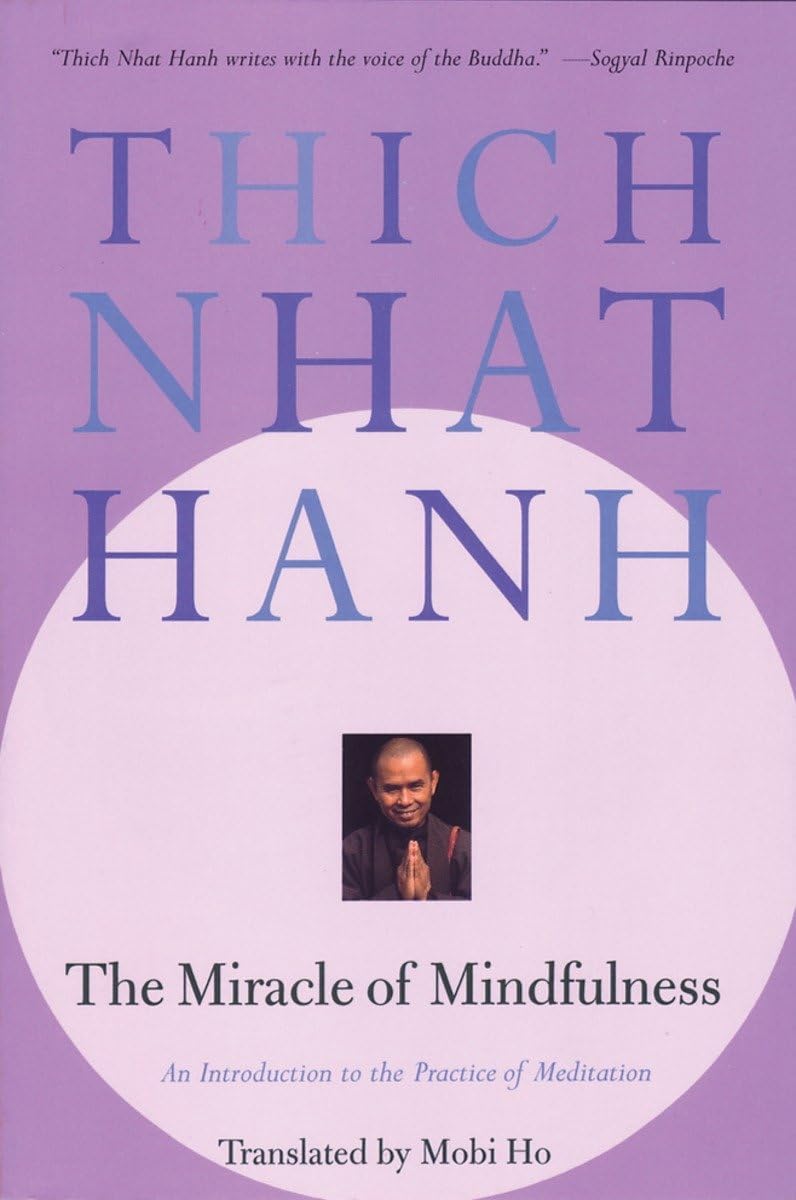
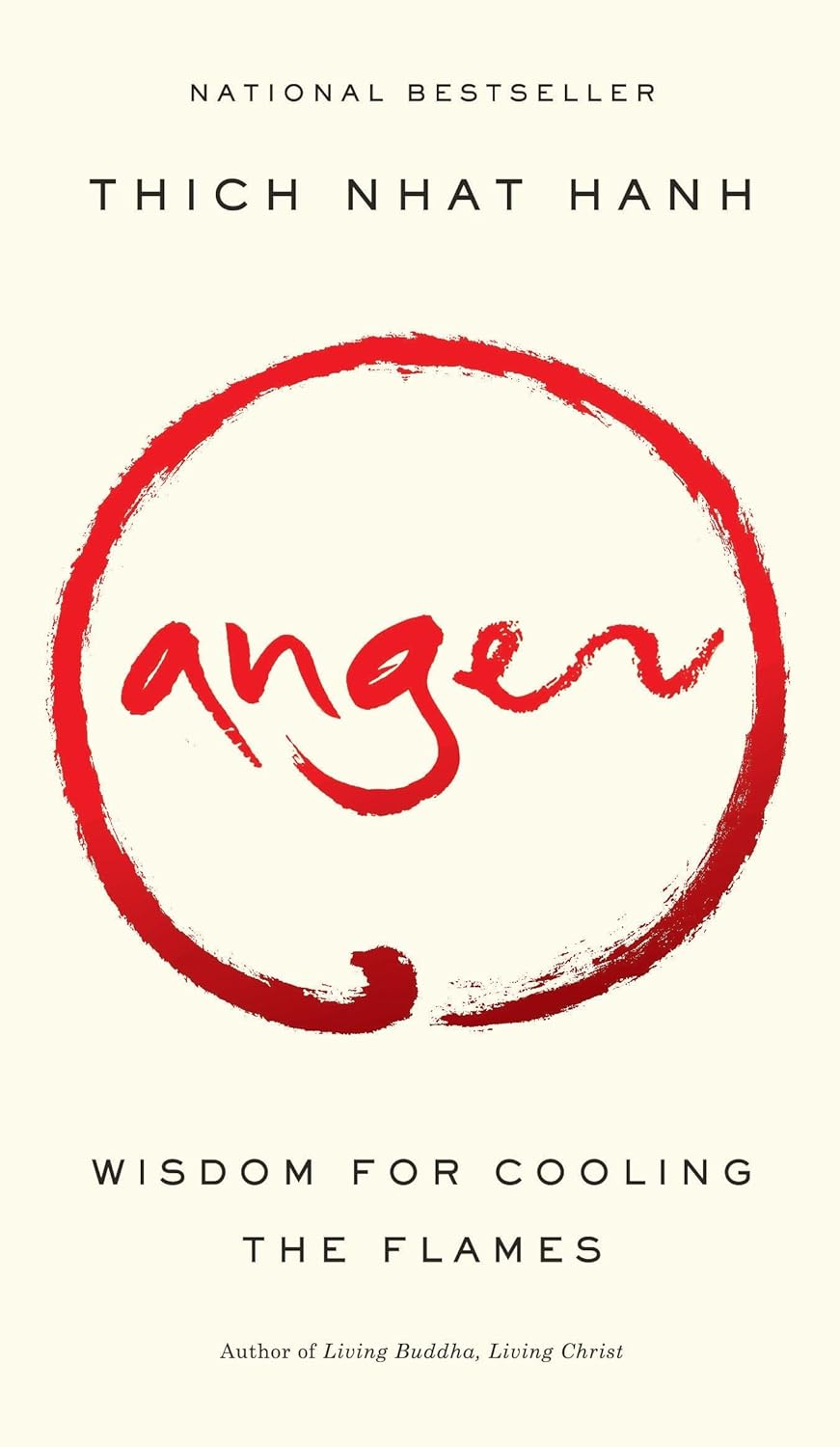
The Buddha raised the bar higher still in the Simile of the Saw (the Kakacupama Sutta, Majjhima Nikaya 21). He tells his monks that people may speak to them in five different ways: at the right time or the wrong time, truthfully or not, gently or harshly, to help or to hurt, from kindness or from ill will. Whichever it is, he asks them to train so that their minds stay unshaken and their hearts keep goodwill, with no hatred inside. Even if bandits were sawing them limb from limb, he says, anyone who let anger rise would not be following his teaching. Few of us will ever be tested that hard. The daily version is smaller: when words come at us, our first job is not to win, but to keep our own mind from being the thing that gets hurt. If anger is the particular difficulty you carry, Thich Nhat Hanh’s book Anger takes a similar view of holding it gently instead of fighting or hiding it, and we reviewed it here.
❈
None of this makes the difficult person right, and it does not mean staying near someone who keeps hurting us. Ananda’s instinct to leave was not wrong in every case. The story’s point is quieter: before we decide to walk away, we can ask what we are walking away from, the person or the pain their words woke up in us. The next time someone’s words land hard, what might change if, before answering, we asked whether this person is, right now, unwell?
If this theme speaks to you, our guide to the benefits of quiet and silence meditation explores the same stillness from a different angle.
A note on this article: “Patience With Difficult People: A Lesson From the Buddha” is inspired by and draws lessons from a chapter in The Legacy of the Awakened One (A Practice of Patience) by Vietnamese author TG Minh Thanh, translated from the original Vietnamese. Among the many themes explored across the book, this chapter focuses on staying patient with insults and with the anger they stir up in us.
This article is part of the Learn library at Buddhism with Maitreya Dharma, where modern neuroscience and the Buddha’s teachings meet in practical, everyday language — no background in Buddhism required.