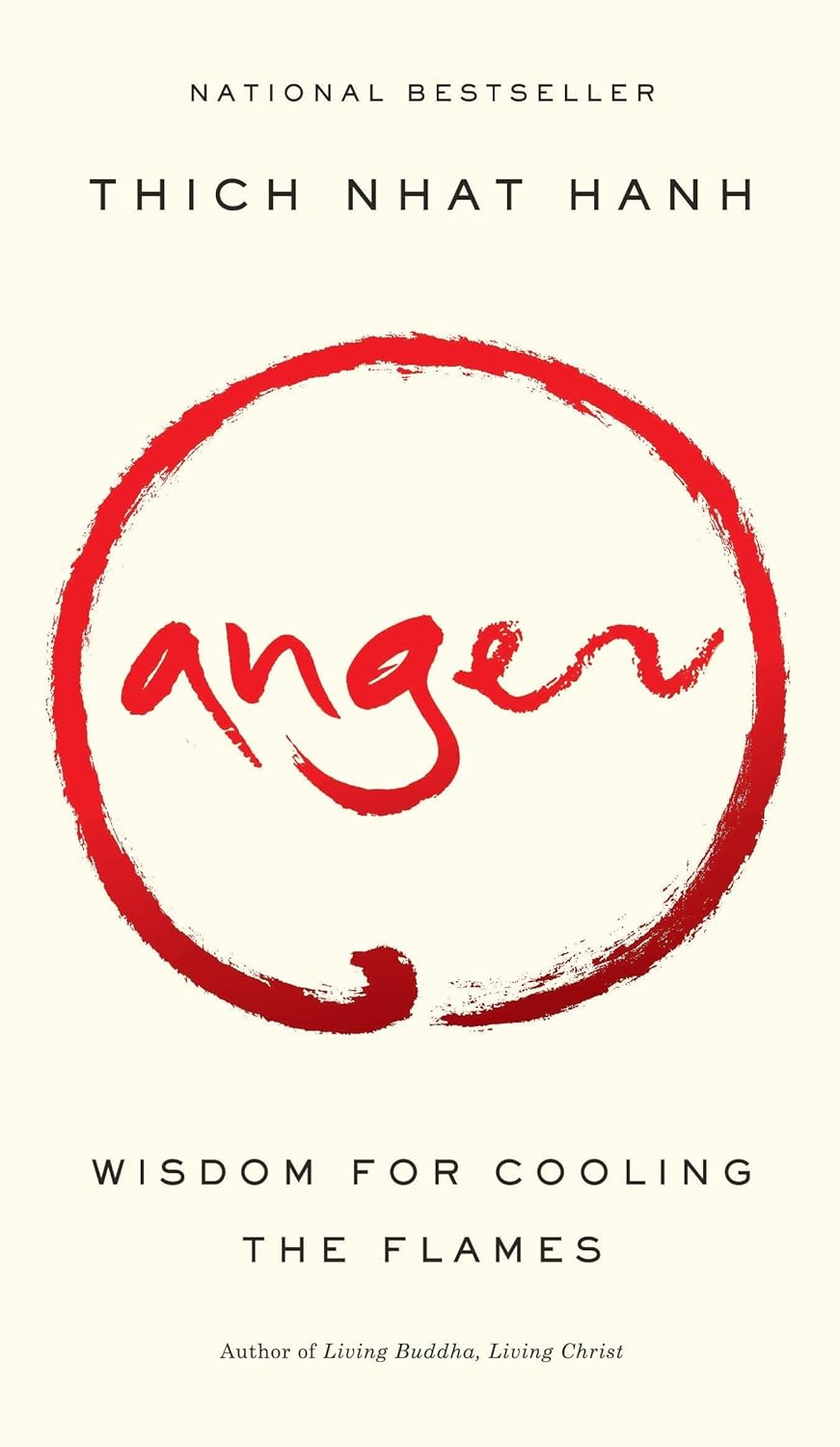
Anger: Wisdom for Cooling the Flames
Not how to suppress anger. How to understand it.
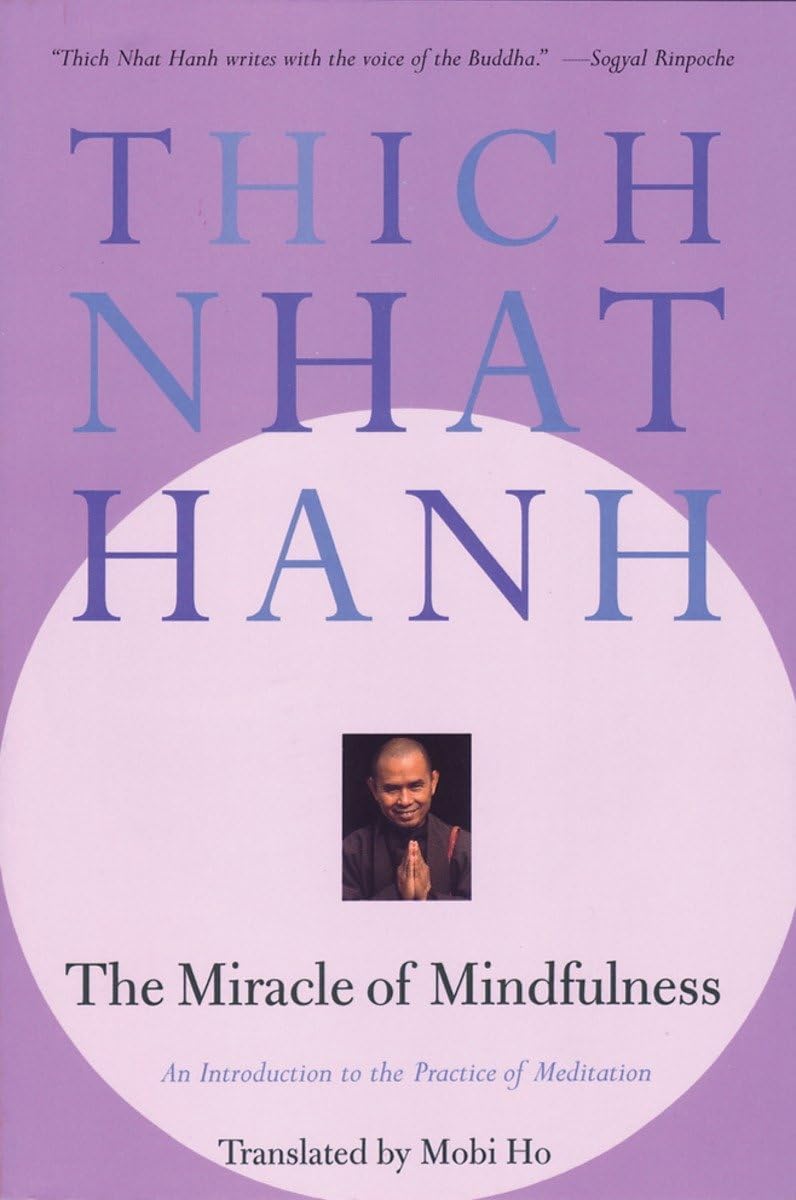
By Thich Nhat Hanh · 224 pages
Anger is not the enemy. It is a signal. This book teaches you how to read the signal before it reads you.
What This Book Is
Most books about anger management teach you to control anger or let it go. Thich Nhat Hanh’s approach is different at the root: he does not ask you to control anger, and he specifically rejects the idea of venting it. He asks you to do something more demanding and more effective — to recognize anger the moment it arises, turn toward it with full attention, and understand where it is actually coming from.
The book is built around a single central image that Thich Nhat Hanh returns to throughout: anger is like a crying baby. The baby is not the enemy. The baby is suffering and needs to be held. When you run from the baby or try to silence it, the crying gets worse. When you pick the baby up and hold it with genuine attention, the crying quiets. The anger is not separate from you. It is part of you — a part in pain — and the only thing that actually helps it is mindful attention, not suppression or expression.
At 224 pages, Anger covers both the immediate moment of anger — what to do in the next thirty seconds — and the longer work of understanding the patterns underneath: the habitual seeds of anger, the role of perception, the way communication can either water or starve the cycle, and the practical tools for repairing relationships that anger has damaged.
The Central Argument
The book’s organizing principle comes from the Buddha’s teaching that suffering arises from three mental states: wrong knowing (moha), obsessive desire (lobha), and anger (dosa). These three are not separate problems — they are typically intertwined. Anger almost always contains wrong perception at its core: we are angry because we believe something is true that is not entirely true, or because we have failed to see the full picture of the other person’s suffering.
This is not a comforting idea, but it is a useful one. Thich Nhat Hanh uses the image of a house on fire: if your house is burning, the intelligent action is to go back and put out the fire, not to chase the person you believe started it. While you are chasing, the house burns. Anger that drives you to attack the other person while your own nervous system is in flames is exactly this: running after the arsonist while the house burns down.
The alternative is to stop — literally — and return to the breath. Not because the breath is magic, but because the thirty seconds it takes to breathe consciously is the gap between the amygdala firing and the prefrontal cortex coming back online. That gap is where the difference between a reactive response and a considered one is made.
He offers several concrete practices: the mindful breathing count for the immediate moment; the anger letter (written but not sent, for processing resentment without escalation); Beginning Anew (a structured practice for repairing communication in relationships); and the Peace Treaty — a formal agreement between people who care about each other to handle anger according to agreed-upon principles rather than instinct. The appendix at the back of the book contains the full text of the Peace Treaty, ready to use.
The neuroscience: Psychologist Daniel Goleman coined the term “amygdala hijack” to describe what happens when the amygdala’s threat-detection signal bypasses prefrontal evaluation and drives a behavioral response before conscious reasoning can intervene — the amygdala processes perceived threats approximately 200 milliseconds faster than the cortex. Neuroimaging studies show that emotion regulation strategies which engage the prefrontal cortex modulate amygdala activity downward, reducing the intensity of the anger response. What Thich Nhat Hanh describes as returning to the breath in the moment of anger is, at the neural level, the precise intervention that restores prefrontal access: slow breathing activates the vagus nerve, lowers physiological arousal, and creates the conditions under which the prefrontal cortex can override the amygdala’s initial output.
The Buddhist Foundation: Anger in the Pali Canon
The Buddha’s treatment of anger in the Pali Canon is extensive and specific. In the Kakacupama Sutta (MN 21) — the Simile of the Saw — he sets what is perhaps the most demanding standard in the entire canon: a practitioner should maintain goodwill even toward someone who attacks them with a saw, limb by limb. The point is not that the attack is acceptable. It is that the internal state of the practitioner — the presence or absence of retaliatory anger — is within the practitioner’s domain and is worth protecting regardless of external circumstances.
The Alagaddupama Sutta (MN 22) contains the Buddha’s teaching on the difference between the raft and the shore: the Dhamma is a tool for crossing, not something to be carried on your head after you have crossed. Thich Nhat Hanh’s approach to anger is in precisely this spirit — the practices he offers are rafts, not doctrines. The anger letter, the Peace Treaty, Beginning Anew: these are practical tools that can be used by anyone, with or without Buddhist practice, and their value is determined by whether they work.
The deeper teaching is about perception. In the Abhidhamma, dosa (aversion/anger) is classified as an unwholesome mental factor that arises on the basis of wrong perception — specifically, failing to see the suffering in the other person that underlies their behavior. The antidote in the canonical framework is not suppression but insight: seeing clearly enough that the other person’s difficulty, not their malice, is what you are encountering. This is what Thich Nhat Hanh means by “understanding” — not intellectually forgiving, but actually seeing through the anger to what is underneath it in both parties.
Who Should Read This
🌟 Final Verdict
Anger is the most practically useful of Thich Nhat Hanh’s books precisely because anger is where most meditation practice breaks down. It is easy to be present on a cushion. The test of practice is what happens in the thirty seconds after someone says the thing that hits the most sensitive nerve.
This book teaches exactly that thirty seconds. And then the hour after it. And then the longer work of understanding why that nerve is so sensitive in the first place. At $8, it may be the most cost-effective investment in relationship quality and nervous system regulation available.