ENSO Sensory Tuning Fork Set Review:
Does 128Hz Actually Calm the Nervous System?
Tuning forks are a quiet, portable way to add sound and vibration to a practice. Here is what the ENSO set gives you, and an honest look at what the research does and does not show.
✋ Rubber activator, no mallet
🎒 Pouch & beginner guide
🔋 No power needed
⚡ Quick Specs
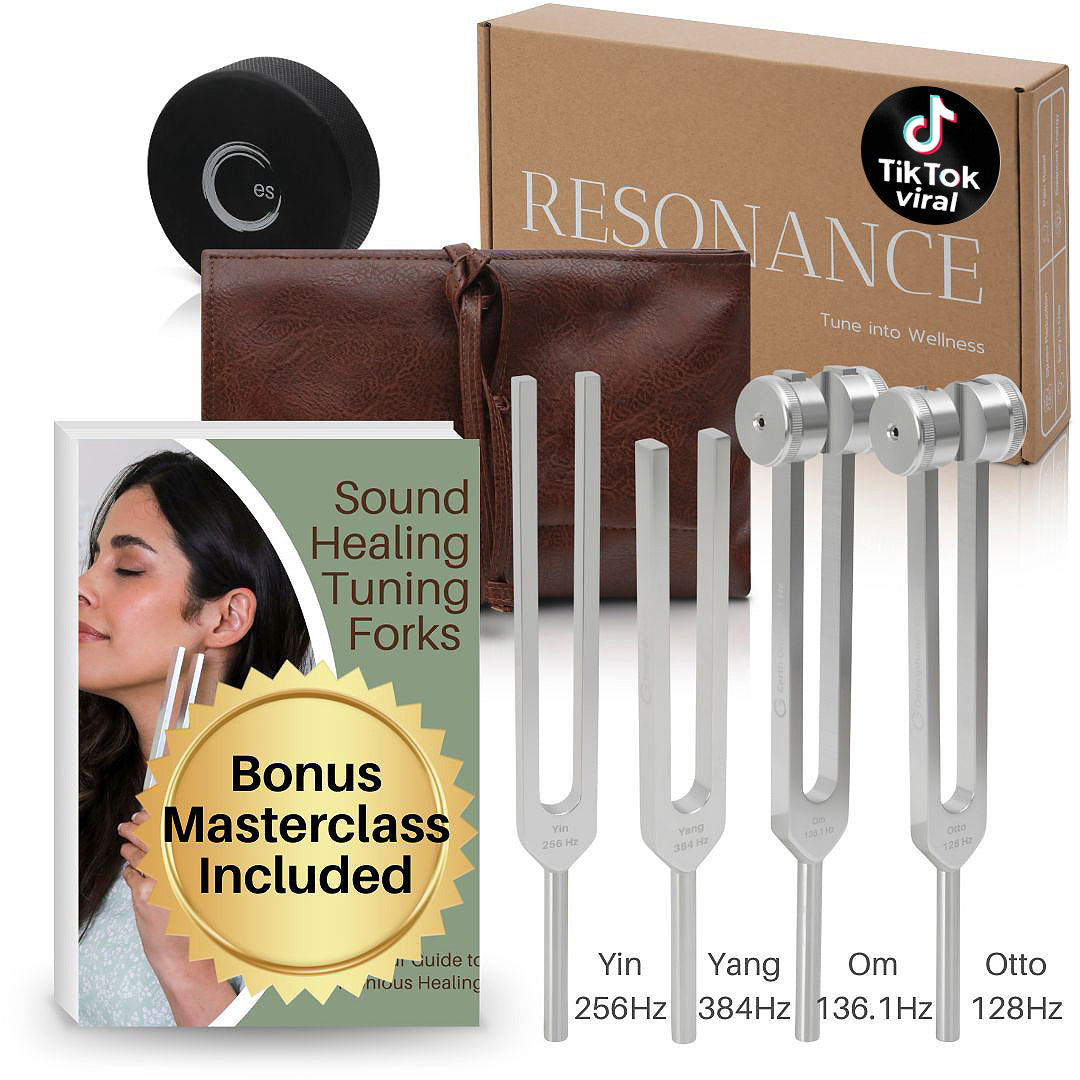
| Brand | ENSO Sensory |
| Type | 4-fork set: 2 weighted, 2 unweighted |
| Frequencies | 128 Hz, 136.1 Hz (weighted); 256 Hz, 384 Hz (unweighted) |
| Material | Lead-free aluminum alloy |
| Activator | Rubber hockey-puck style, no mallet strike |
| Included | 4 forks, activator, vegan-leather pouch, beginner guide |
| Best for | Portable daily nervous-system check-ins |
Why Sound Belongs in a Practice
Silence can be hard to start with. The mind races, the body feels restless, and there is nothing for attention to hold onto. Sound gives it something to follow.
Singing bowls and gongs are the classic choice, but they are bulky and loud. A tuning fork is the compact alternative: you activate it, hold it near the body or ear, and follow the tone and vibration as it fades.
Tuning forks have been used in sound therapy for years, with claims that range from sensible to extravagant. It helps to separate the two.
The ENSO set is a four-fork kit built for daily use at home, with weighted and unweighted forks for different kinds of sessions.
1. What Is in the Box
The set has four forks in lead-free aluminum alloy. The two weighted forks (128 Hz and 136.1 Hz) are heavier and are held against the body for a deeper vibration. The two unweighted forks (256 Hz and 384 Hz) are used near the ears for a clearer, higher tone.
Instead of striking the forks, you activate them with a rubber activator, which gives a clean, consistent tone without the risk of dings or a harsh strike.
It comes with a vegan-leather pouch and a short beginner guide, so you can start the same day. The kit fits in a small bag, so it travels.
💡 Why it can work as a practice:Following a fading tone is a focused-attention exercise. The vibration gives the body something physical to track, which can anchor a restless mind much like breath awareness does.
2. Do 128Hz Tuning Forks Work? What the Research Says
You will see claims that 128 Hz lowers cortisol, balances the nervous system or heals bones. Most of this is not backed by strong evidence. Small studies on vibration and sound suggest relaxing effects, and reviews of sound-based meditation report lower tension and anxiety for many participants.
What is better supported is the broader pattern: slow, steady sound combined with slow breathing is associated with a calmer autonomic state, regardless of the specific frequency.
So the fair view is that the set is a tool for focus and relaxation, and that the exact frequency matters less than your attention and your breath.
3. How to Use Tuning Forks: A 5-Minute Routine
Sit comfortably and take three slow breaths. Activate a weighted fork on the rubber activator, then rest the stem against the breastbone or the top of the shoulder, and feel the vibration spread.
Follow the sound until it fades fully, then pause for a few breaths in the silence. Repeat with a second placement if you like, or use an unweighted fork near each ear.
Use it for a few minutes before a meditation, during a work break, or before sleep. Keep the volume low, avoid placing forks on the head or on any area with injury or implant, and stop if anything feels uncomfortable.
Pros & Cons: An Honest Assessment
✅ What Works Well
- +Four frequencies in one portable kit
- +Rubber activator gives a clean, consistent tone
- +Beginner guide and travel pouch included
- +Quiet enough for shared spaces
- +Gives a restless mind a simple anchor
❌ Worth Knowing
- −Health claims for specific frequencies are not well proven
- −Requires some practice for consistent tone
- −Not for use over implants or injured areas
- −Light on instructions for advanced use
Who Is This For?
FAQ: ENSO tuning fork set Questions
How do you activate a tuning fork?
Strike it lightly against a soft surface or with a suitable mallet, never a hard surface, then hold it near your body and listen.
Do you need training to use tuning forks?
Not for simple personal use as a mindful pause. Treat it as relaxation practice, not medical therapy.
Who should check with a doctor first?
Ask a clinician if you are pregnant or have an implanted device or a medical condition you are unsure about. See also our crystal singing bowl review.
🌟 Final Verdict: ENSO Sensory Tuning Fork Set
The ENSO tuning fork set is a well-made, portable way to practice with sound, and it makes a good first kit.
Enjoy it as a focus and relaxation tool, not as medical therapy. The sound, the vibration and your attention are doing the work.