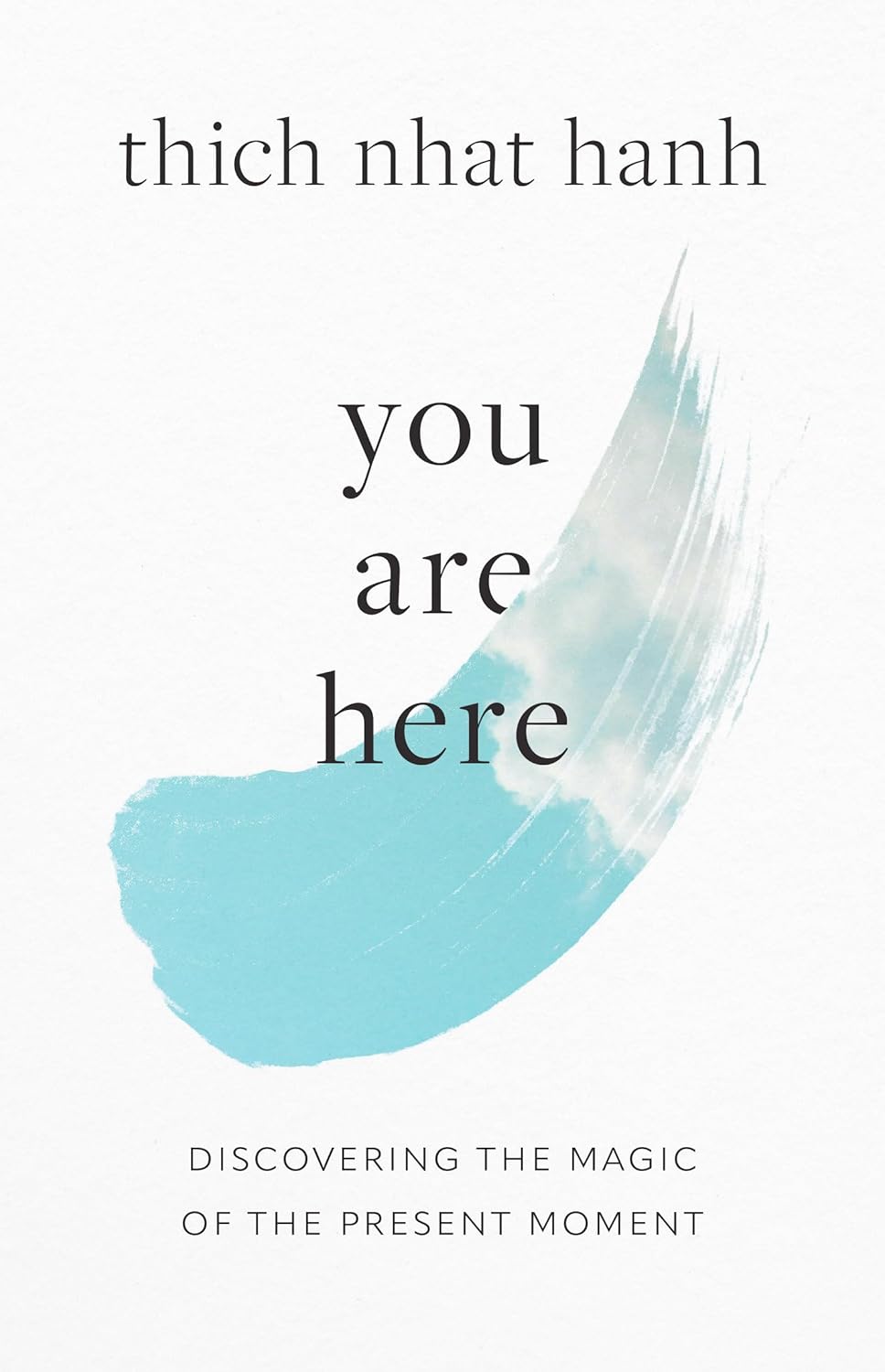
Florensi Meditation Cushion Review:
The Easiest Way to Start Sitting Right
Most beginners give up on sitting meditation not because their mind won’t quiet — but because the floor hurts their knees and their back starts aching before the timer goes off.
🎛️ Adjustable loft
✅ Machine-washable cover
🧘 16″ × 5″, carry handle
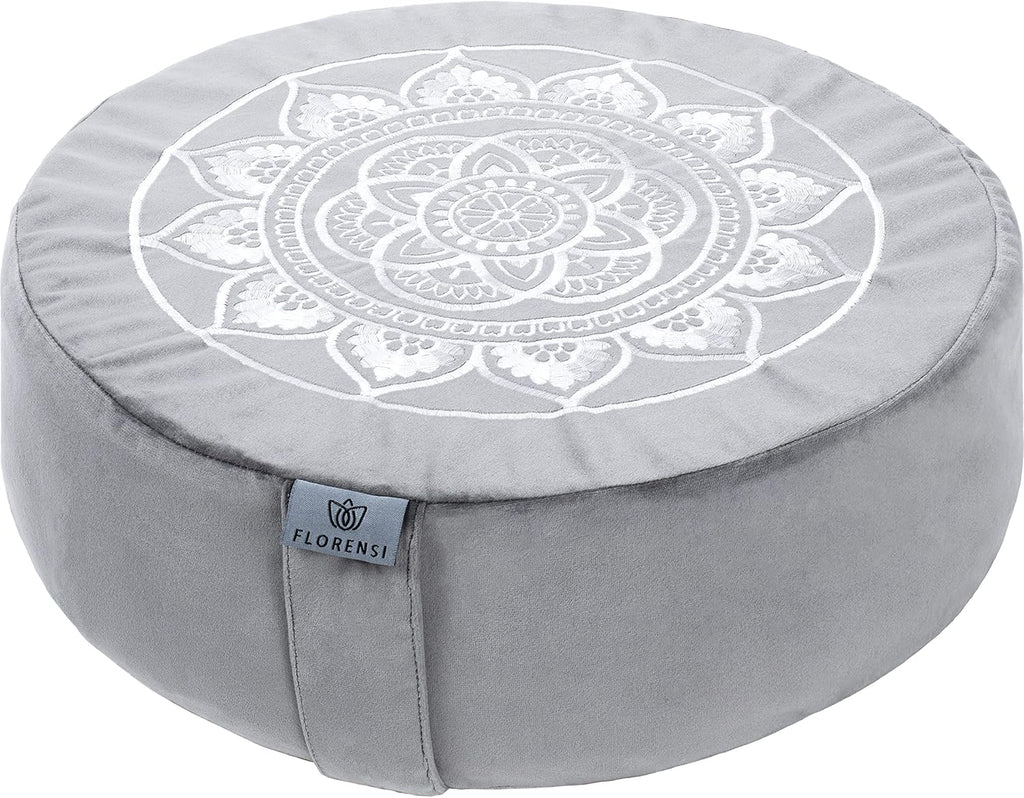
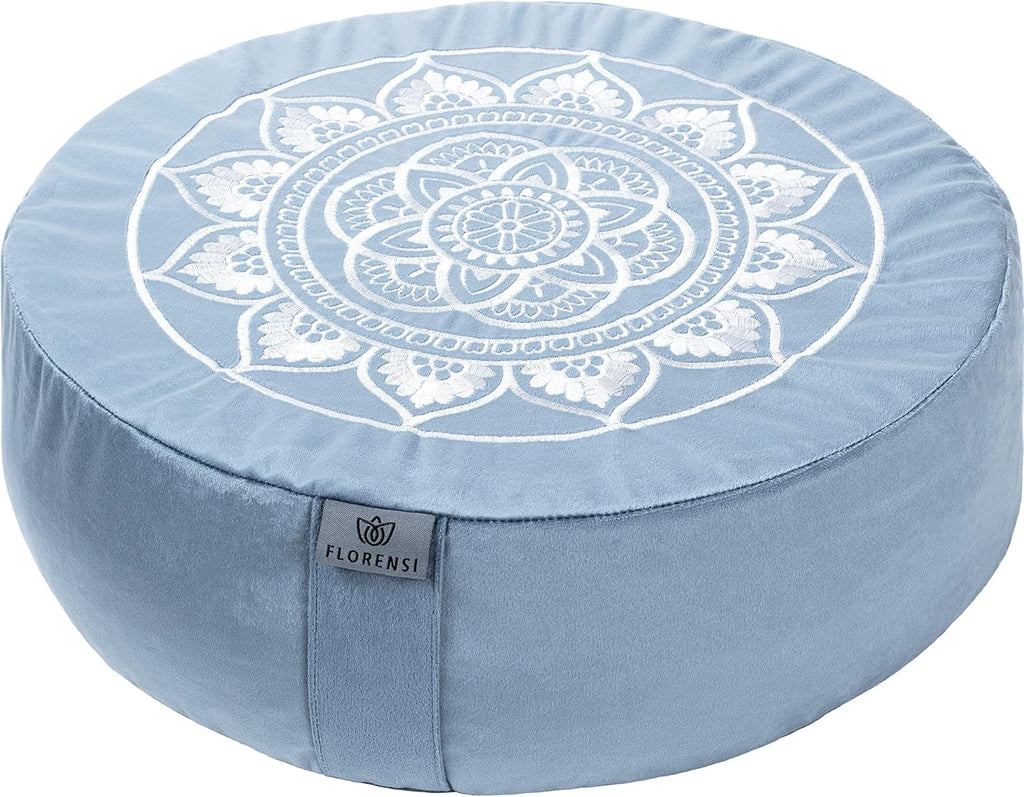
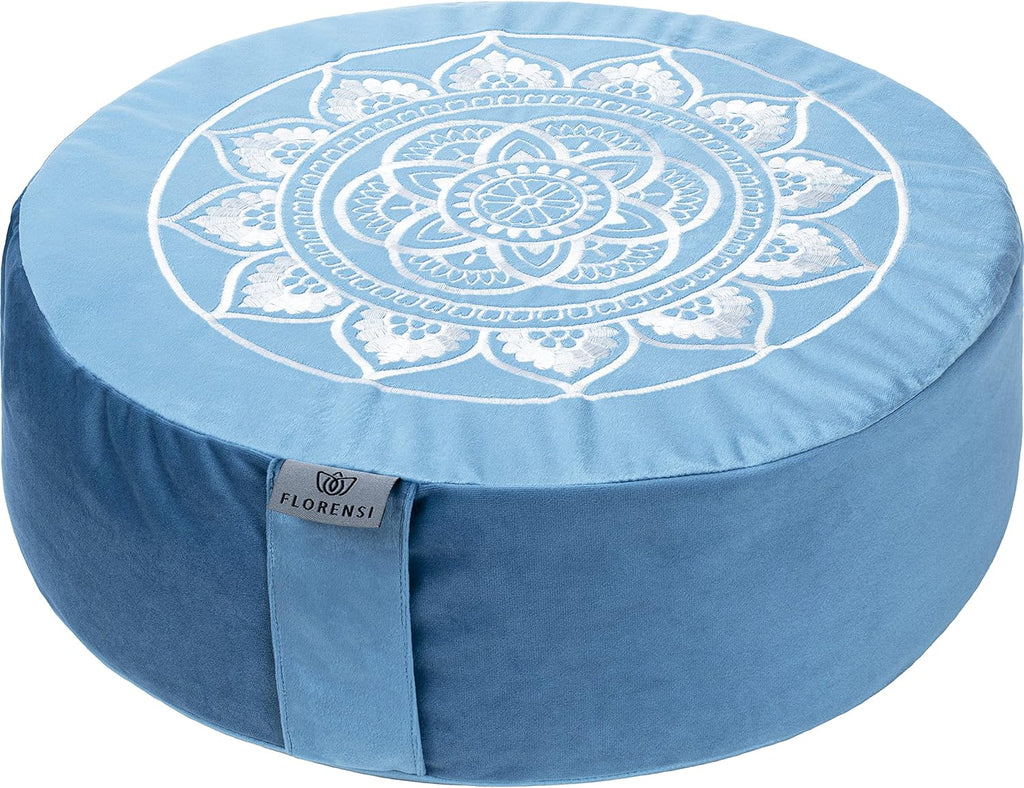

⚡ Quick Specs
| Brand | Florensi |
| Shape | Round Zafu |
| Size | 16″ diameter × 5″ height |
| Fill | 100% buckwheat hulls + 1″ foam base |
| Cover | Soft velvet, removable, machine washable |
| Adjustable | Yes — add/remove buckwheat via zipper |
| Weight | ~5 lbs |
| Colors | Grey, Sage Green, Ocean Abyss + more |
| Rating | 4.8 ★ (11,000+ reviews) |
Why the Floor Is the First Problem Beginners Need to Solve
You’ve decided to try meditation. Maybe you sat down cross-legged on the carpet, set a 10-minute timer, and lasted about four minutes before your left knee started throbbing and your lower back rounded into a slump. You spent the rest of the time thinking about your posture instead of your breath.
This isn’t a mental discipline problem — it’s a geometry problem. When you sit flat on the floor with no cushion, your hips are level with or lower than your knees. That forces your pelvis to tilt backward, which collapses your lumbar curve and puts the full weight of your spine onto the discs in your lower back. Ten minutes in, your body is doing structural damage prevention instead of resting.
A zafu — the traditional round meditation cushion — solves this by tilting your pelvis forward just enough to stack your spine naturally above your hips. Knees drop below hip level. The lower back finds its natural curve. Suddenly sitting upright for 15, 20, or 30 minutes doesn’t require constant muscular effort to maintain.
The Florensi is the version of that idea that’s easiest to start with — approachable price, beautiful design, and enough adjustability to work for different body types right out of the box.
1. What Makes Buckwheat the Right Fill for Sitting
Most cheap floor pillows use foam or cotton — they compress flat under your weight within minutes, giving you zero lift by the time you actually need support. Buckwheat hulls work differently: they’re small, firm, and shift to fill the space around your sit bones without flattening. When you settle onto a buckwheat zafu, it distributes your weight across the hull surface and holds its shape throughout the session.
The Florensi pairs buckwheat hulls with a thin 1-inch foam base, which softens the initial contact slightly — a smart addition for beginners whose bodies aren’t yet accustomed to sitting on a firm surface. The inner bag zips open so you can remove a handful of hulls if the cushion feels too high, or order extra hulls to add height as your practice deepens.
The velvet cover is softer than the cotton covers you’ll find on more “serious” zafus, and that’s a deliberate choice for this product — it makes the cushion feel more like something that belongs in your home than a piece of gym equipment, which matters for building the daily habit.
💡 The posture connection: Research on prolonged sitting has consistently linked lumbar support and hip-knee alignment to activation of the parasympathetic nervous system — the body’s rest-and-digest state. When your body isn’t working to hold itself upright, cortisol levels drop and the nervous system can genuinely settle. The right cushion isn’t just about comfort; it removes a physical obstacle that keeps the nervous system on low-level alert throughout the sit.
2. The Science Behind Sitting Position
Harvard Medical School and Stanford researchers studying meditation outcomes have found that physical discomfort during a sit is one of the strongest predictors of session abandonment — not difficulty concentrating, not distraction, but body pain. When the lumbar spine is unsupported, the body’s pain signaling runs in the background of every breath, keeping the amygdala on a low level of alert that’s the opposite of what meditation is trying to achieve.
Sitting on a cushion that tilts the pelvis forward by even 5–10 degrees engages the natural lordotic curve of the lower spine. This takes the load off intervertebral discs and lets the deep postural muscles (the multifidus and erector spinae) do their job with far less effort — meaning less fatigue, less pain signal, and more available attention for the practice itself.
Put simply: the right cushion gives your nervous system permission to settle. The wrong surface (or no surface) keeps it in low-level problem-solving mode.
3. Using It Mindfully
Sit on the front third of the cushion — not the center. This is the most common mistake beginners make. Sitting centered distributes weight evenly and keeps the pelvis level; sitting on the front edge lets gravity tilt the pelvis slightly forward, which is exactly what creates the natural lumbar curve you’re after.
Start with whatever loft the cushion ships with and give it two to three sessions before adjusting. Most people find they need to remove a small amount of buckwheat in the first week as the hulls settle and compress slightly. Adjust in small increments — a handful at a time — rather than removing a large amount at once.
A simple 5-minute routine: place the cushion in a consistent spot, sit down, take three slow breaths to let your spine stack, then begin. The physical ritual of preparation signals to the nervous system that something different is about to happen — and that signal compounds over time.
Pros & Cons: An Honest Assessment
✅ What Works Well
- +11,000+ reviews — one of the most validated zafus on Amazon
- +Buckwheat + foam combo suits beginners better than pure buckwheat
- +Adjustable loft via inner zipper — one cushion adapts to your body
- +Machine-washable velvet cover, looks great in any room
- +Carry handle — easy to move between rooms or take to class
❌ Worth Knowing
- −The zipper opening is small — refilling or washing requires emptying the inner pouch first
- −5″ height may not be enough for taller practitioners or those with very tight hips
- −Velvet collects pet hair and dust — needs regular lint rolling
- −Round shape is less ideal for very tight hips vs crescent-shaped alternatives
Who Is This For?
🌟 Final Verdict: Florensi Meditation Cushion
The Florensi is the right first zafu for most people. It solves the core beginner problem — the floor hurting before the practice can take hold — without demanding you invest in gear before you’ve proven the habit to yourself.
The buckwheat-and-foam combination, adjustable loft, and washable velvet cover give you everything a beginner needs. The 11,000+ reviews aren’t inflated — this cushion genuinely changes what’s possible in the first few weeks of a sitting practice. A body that can settle into stillness without fighting its own posture is a body that can actually rest, and that rest is what the practice is for.