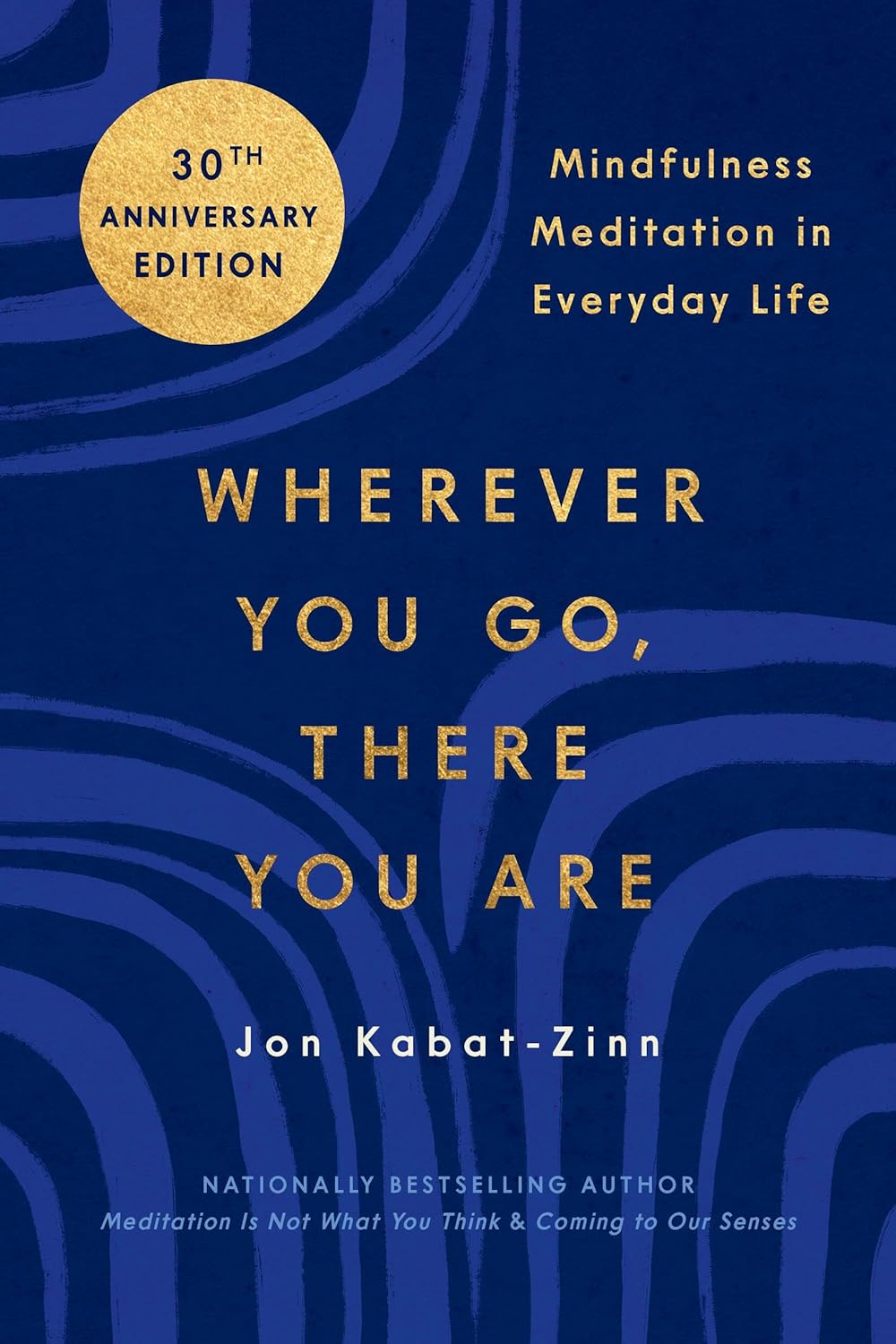
Wherever You Go, There You Are
Mindfulness Meditation in Everyday Life
By Jon Kabat-Zinn, PhD · 320 pages
You already know how to be present. You just keep forgetting. This book is the reminder.
What This Book Is
Jon Kabat-Zinn is a scientist, not a monk. He holds a PhD in molecular biology from MIT and spent decades as a professor of medicine at the University of Massachusetts Medical School, where he founded the Stress Reduction Clinic in 1979 and developed Mindfulness-Based Stress Reduction (MBSR) — the program that introduced mindfulness practice to Western medicine and has since been studied in hundreds of clinical trials worldwide.
Wherever You Go, There You Are is not a clinical manual. It is a short, readable book about what mindfulness actually feels like in daily life — not during formal meditation sessions, but during ordinary moments: washing dishes, sitting in traffic, waiting in line, having a difficult conversation. The central premise is simple: most of us spend most of our time somewhere other than where we actually are. The mind is rehearsing the future or replaying the past. The body is here. The mind is not. Mindfulness is the practice of closing that gap.
The book is organized into short chapters — most just two or three pages — making it easy to read in small pieces and return to repeatedly. Many readers keep it on a desk or nightstand and open it at random. It works this way because each chapter stands on its own as a complete observation about attention and daily life.
The Central Argument
Kabat-Zinn’s core argument is that mindfulness is not something you add to your life — it is something you uncover within the life you already have. There is no special state to reach, no level of calm to achieve before you qualify. Whatever is happening right now — including stress, boredom, physical discomfort, or mental noise — is already a valid object of mindful attention. The instruction is always the same: notice what is actually here, without trying to make it different.
He introduces three forms of meditation practice that can be integrated into any daily routine. The first is formal sitting practice: setting aside time to simply watch the breath and notice where the mind goes. The second is walking meditation: slowing down enough to feel each step as a complete event rather than a means of getting somewhere. The third is what he calls informal practice: bringing the same quality of attention to any ordinary activity — eating, showering, listening to someone speak — that you would bring to formal sitting.
Throughout the book, Kabat-Zinn returns to one consistent observation: the thinking mind is not the enemy, but it is also not the whole of what you are. You can observe your thoughts without being driven by them. That gap — between a thought arising and being automatically acted upon — is where mindfulness practice lives. Building that gap, one ordinary moment at a time, is what the book is actually teaching.
The science: MBSR, the program Kabat-Zinn built, is one of the most extensively studied psychological interventions available. A 2024 systematic review and meta-analysis published in SAGE Open Medicine covering 13 studies with 1,131 participants found medium effect sizes for reductions in depression and PTSD symptoms. A meta-analysis in PLOS ONE found MBSR significantly reduces emotional exhaustion, stress, psychological distress, depression, and anxiety. A 2024 review of randomized controlled trials found MBSR reduced perceived stress by up to 33% and mental health issues by up to 40%. These are not self-report numbers — they are controlled trial results. The practices described in this book are the foundation of that evidence base.
The Buddhist Foundation: Where the Practice Comes From
Kabat-Zinn is transparent about his sources. He learned meditation directly from Philip Kapleau, a Zen teacher who trained in Japan for thirteen years and wrote The Three Pillars of Zen. He also practiced with Thich Nhat Hanh and with teachers in the Vipassana tradition. MBSR was built by taking the core practice of the Buddha’s mindfulness teaching — paying sustained, non-judgmental attention to present-moment experience — and removing the religious framing so it could be used in a hospital setting with patients who had no interest in Buddhism.
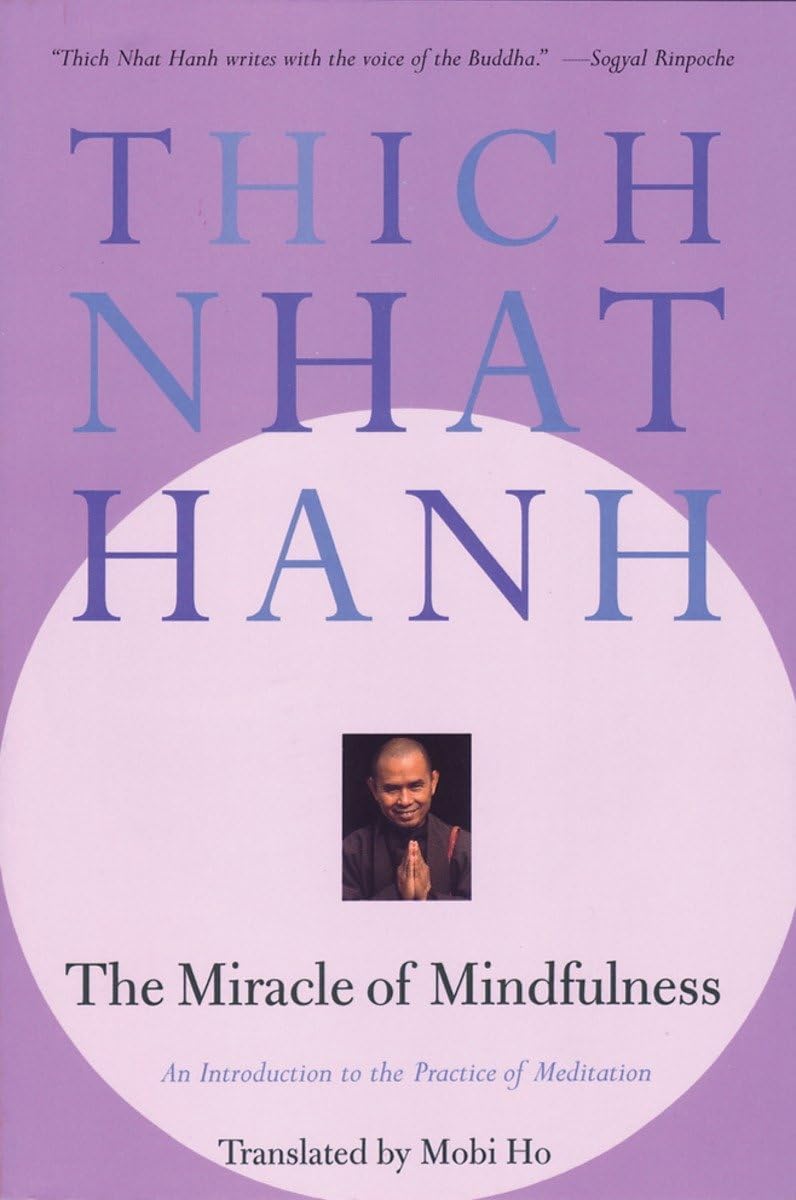
This is worth understanding clearly. Kabat-Zinn did not invent mindfulness. The Buddha taught it 2,500 years ago in the Satipatthana Sutta as the direct path to understanding the nature of the mind and reducing suffering. What Kabat-Zinn did was bring that practice into medicine, measure it rigorously, and demonstrate that it works even without the religious context. For readers of this site, Wherever You Go, There You Are is essentially the same teaching you find in the three Thich Nhat Hanh books we have reviewed — just written by a scientist, in clinical language, aimed at a Western secular audience.
Reading Kabat-Zinn and Thich Nhat Hanh together is genuinely useful. They are teaching the same thing from different angles. One is a monk writing from 2,500 years of practice tradition. The other is a scientist writing from 40 years of clinical research. Both point at the same gap between stimulus and response, the same instruction to return to the breath, the same observation that the present moment is the only place where life actually happens.
Who Should Read This
🌟 Final Verdict
This book does one thing and does it very well: it makes mindfulness feel ordinary. Not a spiritual achievement, not a clinical outcome, not something you have to earn. Just paying attention to what is actually happening, where you already are, with what is already available to you.
If you have read the Thich Nhat Hanh books and want a second voice on the same practice — one that comes from decades of clinical work rather than monastery life — this is the right next book. If you are completely new and want something that requires no background at all, start here.