WBM Himalayan Salt Lamp Review:
The Light That Tells Your Brain It’s Time to Rest
Your phone, laptop, and overhead lights are all working against your ability to wind down. One simple swap — amber light before bed — works with your brain’s biology instead of against it.
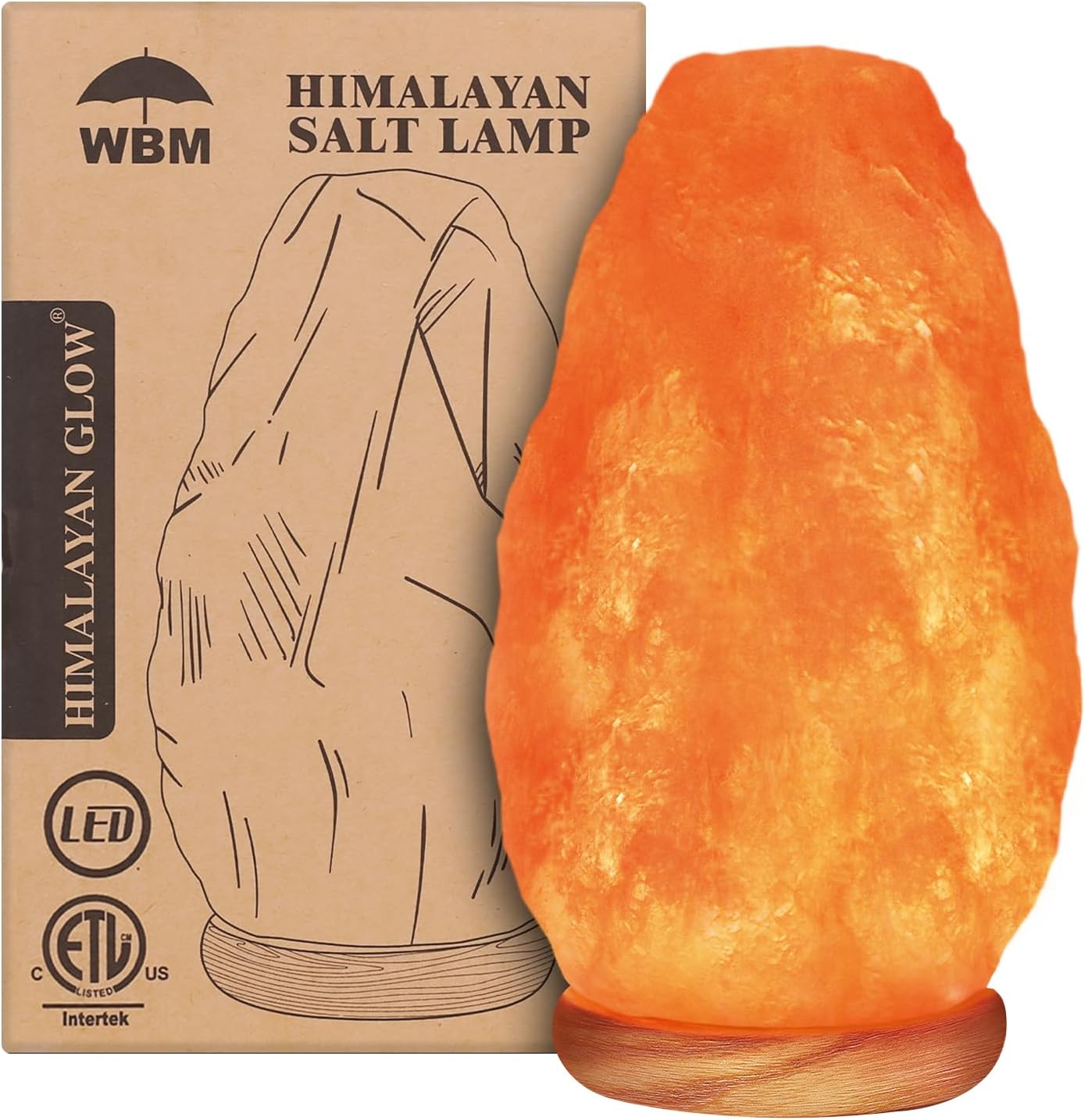
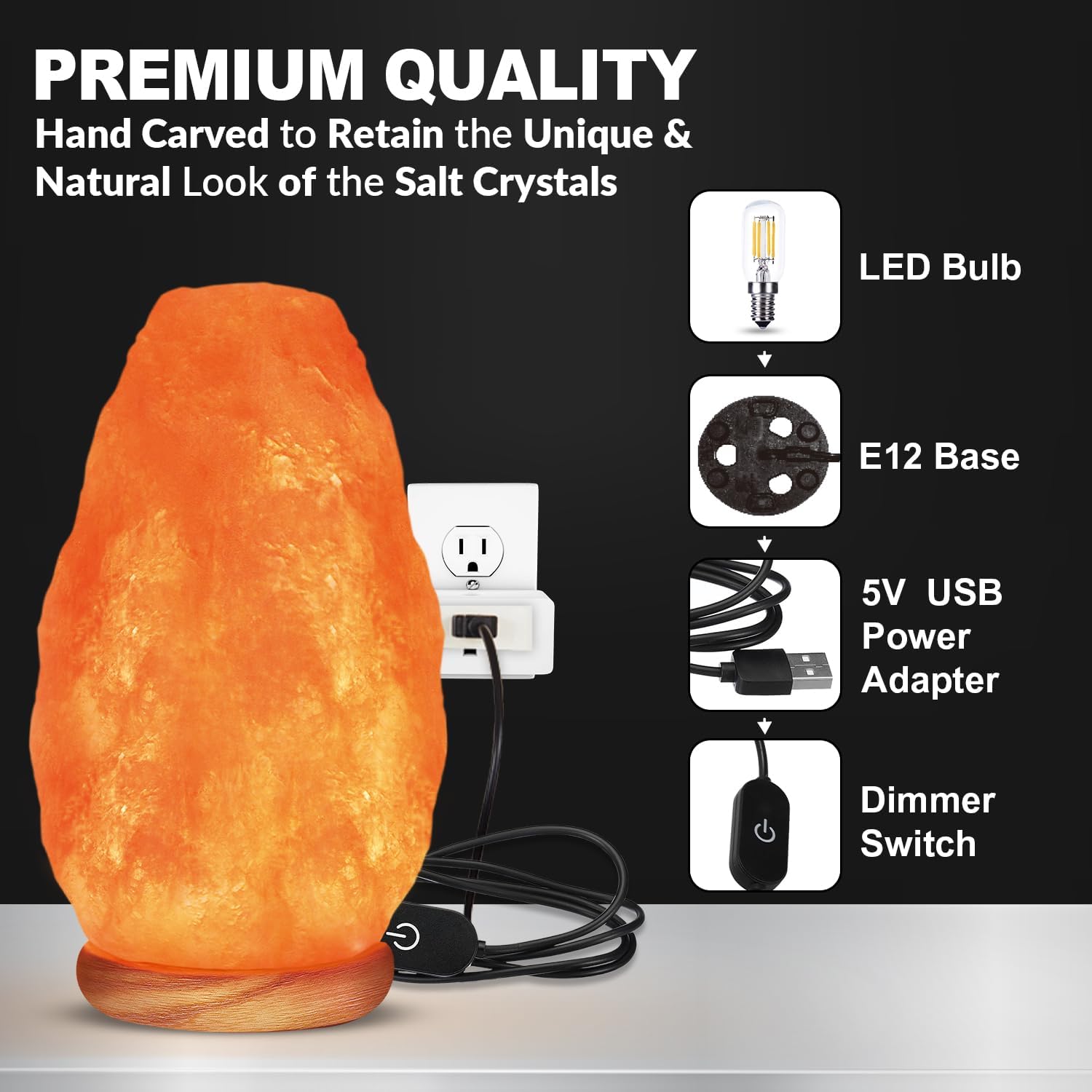
🔆 Touch dimmer control
🪨 100% natural Himalayan salt
🌲 Neem wood base, ETL certified

⚡ Quick Specs
| Brand | WBM / Himalayan Glow |
| Model | 1002 (5–7 lbs) |
| Light color | Warm amber (~2700K) |
| Control | Touch dimmer, USB powered |
| Salt | 100% natural Himalayan pink crystal |
| Base | Neem wood (termite-free, durable) |
| Certifications | ETL certified |
| Rating | 4.4 ★ (Amazon) |
Why the Light in Your Room Is Keeping You Wired
Most people try to wind down at night but wonder why they can’t settle — even after putting the phone down, turning off the TV, and dimming the overhead lights. The issue is often what replaced those light sources: cool-white LED bulbs, laptop screens on low brightness, or bathroom lights during the evening routine. All of them emit significant amounts of blue-spectrum light, and blue light tells a very specific part of your brain to stay awake.
The pineal gland uses light wavelength as its primary signal for melatonin production. Blue and white light (5000K–6500K) strongly suppresses melatonin. Amber and warm red light (below 3000K) barely affects it at all. This is why firelight and candlelight never disrupted human sleep patterns before electric lighting — they emit almost entirely in the warm amber spectrum that the brain doesn’t interpret as “daytime.”
A Himalayan salt lamp running at low to medium intensity puts out light in exactly the range that doesn’t disrupt melatonin. It’s dim enough to create an atmosphere of wind-down rather than activity, and warm enough in color temperature that the brain receives a “dusk” signal rather than a “midday” one. For meditation before sleep, or simply sitting quietly in the hour before bed, it does what your overhead lights cannot: it actively supports the biological shift toward rest.
1. What This Lamp Actually Does (and What It Doesn’t)
Let’s be clear about what a Himalayan salt lamp is and isn’t. It’s a beautiful, functional source of warm amber light. Each one is hand-carved from a genuine pink salt crystal mined in Pakistan, mounted on a neem wood base, and lit from inside by a small bulb. The WBM 1002 uses a touch dimmer and USB power, so you can adjust it from a very faint glow all the way up to a warm reading-level brightness.
You’ll often see claims about negative ions and air purification in salt lamp marketing. The honest answer is that the research on these claims is not strong enough to recommend the lamp for those reasons. The crystal does absorb some moisture from the air and release it slowly, but the ion output is negligible compared to what would be needed to meaningfully affect air quality in a normal room.
What it genuinely does — and does well — is provide warm, dimmable ambient light in a form that’s visually beautiful and emotionally calming. The glow from a salt lamp in a dim room has a quality that overhead lighting cannot replicate: it’s directional, textured by the irregular surface of the crystal, and the warm color creates an atmosphere that most people describe as immediately more relaxed. That effect is real, even if the mechanism is simply “this light looks and feels like rest.”
💡 The light environment matters: Stanford sleep researcher Dr. Andrew Huberman has emphasized that light is the primary signal the circadian system uses to set the body clock. Specifically, avoiding blue-spectrum light in the 2–3 hours before sleep is one of the highest-leverage changes most people can make to sleep quality. A salt lamp as the primary light source during an evening meditation session or pre-sleep wind-down is a practical, low-friction way to implement this. It requires no discipline — you just turn it on instead of the overhead light.
2. The Science of Light and the Circadian System
The human body has a master clock in the suprachiasmatic nucleus (SCN) of the hypothalamus that coordinates nearly every physiological process — sleep, hormone release, digestion, immune function — around a roughly 24-hour cycle. The primary input to this clock is light, specifically the intensity and wavelength of light hitting specialized photoreceptor cells in the retina called intrinsically photosensitive retinal ganglion cells (ipRGCs).
These cells are maximally sensitive to blue wavelengths around 480nm. When they detect blue light, they send a signal to the SCN to suppress melatonin production and increase cortisol — essentially telling the body it’s daytime. When blue light is absent and only warm wavelengths remain, the suppression lifts and melatonin begins to rise naturally, preparing the body for sleep.
Research from Harvard Medical School has shown that even relatively dim blue-enriched light in the evening can delay melatonin onset by 90 minutes or more and reduce total melatonin levels by up to 50%. Conversely, switching to warm amber light sources in the hours before bed significantly reduces this suppression. The salt lamp works by providing an alternative light source that sits almost entirely outside the wavelength range that triggers the blue-light suppression pathway.
3. Using It Mindfully
Turn the salt lamp on at least 60 to 90 minutes before your intended sleep or meditation time, and turn off or dim other light sources in the room. The transition from bright overhead lighting to the lamp’s warm glow is itself a cue — over time, the nervous system associates this light shift with the beginning of rest, building a conditioned response similar to what incense or a consistent bedtime routine creates.
During seated meditation in the evening, position the lamp at eye level or slightly below — not above you, where it would simulate overhead daylight. Dimmed to a low setting, it provides just enough light to be aware of the room without stimulating alertness. This is the ideal light level for body scan meditation, breath awareness, or simply sitting quietly before sleep.
Important: this lamp is meant for the pre-sleep hour, not for sleeping with. Turn it off when you actually go to sleep — even warm light can disrupt sleep quality if left on through the night. The dimmer makes it easy to take it all the way down before turning off.
Pros & Cons: An Honest Assessment
✓ What Works Well
- +Warm amber light genuinely supports melatonin production before sleep
- +Touch dimmer lets you adjust from full glow to near-dark with a single touch
- +Each crystal is unique — the texture and color variation make it genuinely beautiful
- +ETL certified, neem wood base, USB powered — practical and safe
- +At $22, one of the most cost-effective changes you can make to your sleep environment
✗ Worth Knowing
- −Not a sleep aid when left on all night — turn it off when you actually sleep
- −Negative ion and air purification claims are not well-supported by research
- −Salt absorbs moisture — in humid climates, wipe down occasionally to prevent sweating
- −Light output is low — not suitable as a primary reading lamp, only for ambiance
Who Is This For?
FAQ: WBM Himalayan Salt Lamp Questions
Does a salt lamp help you sleep?
Its warm amber light (about 2700K) does not suppress melatonin the way cool-white light does, which supports a wind-down routine. It is not a sleep aid, so turn it off when you actually go to sleep.
Do salt lamps purify the air?
Negative ion and air-purification claims are not well supported by research, so treat this as an ambiance light.
Do salt lamps sweat in humid rooms?
Salt absorbs moisture, so in humid climates wipe the lamp down occasionally to prevent sweating.
🌟 Final Verdict: WBM Himalayan Salt Lamp
The WBM Himalayan Salt Lamp does one thing exceptionally well: it puts warm, non-disruptive amber light into your practice or wind-down space at a price point that makes it accessible to anyone. Ignore the negative ion marketing. Focus on what it actually delivers — a beautiful, dimmable light source that works with your circadian biology instead of against it.
If you sit in the evening, if you struggle to wind down after screens, or if you want your meditation space to feel like a sanctuary rather than just another room — this lamp is one of the simplest, most cost-effective changes you can make. Turn it on. Turn off the overhead. Notice the difference within a week.