One With Tea Organic Japanese Sencha Review:
A Loose-Leaf Foundation for a Tea Meditation Practice
Watching whole leaves unfurl in hot water is part of what makes brewing loose-leaf tea a genuine practice — here’s why this particular sencha is worth building that ritual around.
🌱 USDA + JAS Organic
🌡️ Brew at 160–180°F
🔁 Re-steepable
⚡ Quick Specs
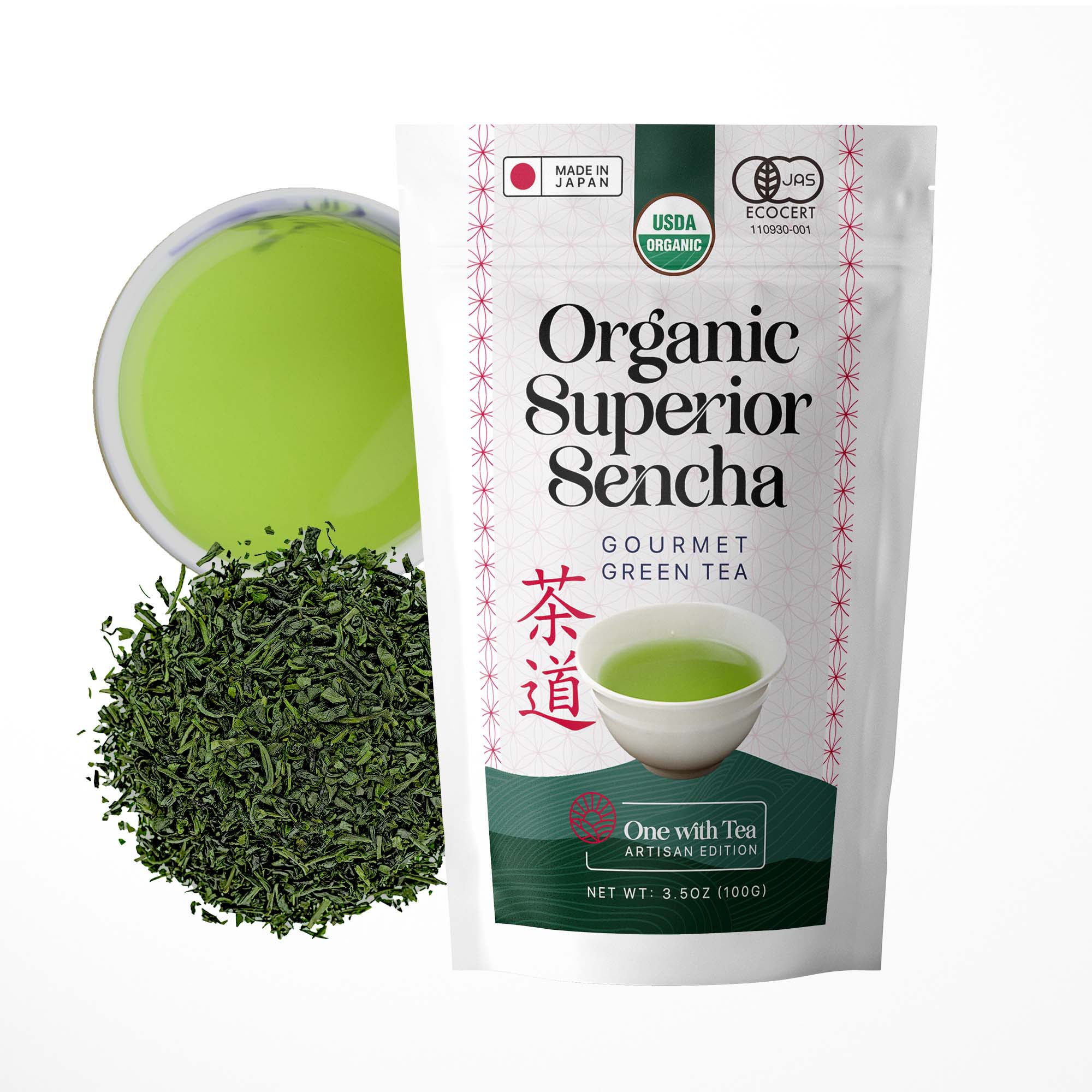
| Type | Whole-leaf loose leaf Japanese sencha green tea |
| Origin | Japan (sourced from small tea-growing regions the brand visits directly) |
| Certifications | USDA Organic and JAS Organic (Japan) — dual certification |
| Format | Loose leaf pouch |
| Brewing | 160–180°F for 1–2 minutes; re-steepable |
| Maker | One With Tea (Lovepixel INC.) |
Why Loose-Leaf Tea Invites You to Stay
A tea bag is designed to disappear into the background — dunk it, forget it, drink while doing something else. Loose-leaf tea resists that by design. Watching whole leaves slowly unfurl and darken the water is a small, built-in reason to actually stay with the cup instead of walking away from it, which is exactly what a tea meditation practice asks for.
One With Tea’s Organic Japanese Sencha is a straightforward, well-sourced way to build that ritual around a genuinely good everyday green tea, rather than an occasional specialty purchase reserved for special mornings.
1. Why Whole Green Tea Calms Better Than Isolated Compounds
Green tea’s calming reputation comes from more than folklore. A study by Unno, Iguchi, Tanida, et al. (2013), published in Experimental Physiology, examined how the interplay between green tea’s components — L-theanine, catechins, and caffeine — affects the body’s stress response. The researchers found that theanine’s anti-stress effect (measured through adrenal gland changes following induced psychosocial stress) was blocked when caffeine and the catechin EGCG were present in isolation, but restored when the tea was consumed as a whole beverage, where other compounds cooperate to preserve theanine’s calming action. In plain terms: the calming effect isn’t from any single ingredient in green tea, but from drinking the tea as a whole, the way it naturally comes.
This is a useful reminder against chasing “the one active compound” in isolation — a full cup of properly steeped sencha is doing something more complex than any single extract could replicate, which is one more reason the whole ritual of brewing loose leaf, not just the beverage itself, is worth the extra few minutes.
2. Brewing Sencha as a Tea Meditation
Sencha rewards attention at the brewing stage specifically. Water too hot will scald the leaves and pull out bitterness; water at the recommended 160–180°F, poured slowly and watched rather than walked away from, draws out the tea’s natural sweetness instead. Treat that steep as the practice itself — watching the leaves open, noticing the color shift in the water — rather than dead time before the “real” moment of drinking begins.
3. Farm-Level Sourcing From One With Tea
One With Tea’s founder has made a practice of visiting the small Japanese farms and regions the brand sources from directly — from Yame to Wazuka to the tea-growing areas around Mt. Fuji — spending time with the farmers themselves rather than sourcing at a distance. On the brand’s own site, the founder describes meeting a veteran tea farmer in the mountains who told them, “Tea is an empty canvas — every farmer starts with the same leaf, but what you do with it, that’s where the art lives.” That kind of firsthand, farm-level sourcing is reflected in the tea’s dual certification: both USDA Organic and Japan’s JAS Organic standard, two systems that are mutually recognized rather than just one or the other.
Pros & Cons: An Honest Assessment
✅ What Works Well
- +Genuinely full-leaf tea, not the broken-leaf “dust” that fills most bagged teas
- +Dual USDA Organic and JAS (Japan) Organic certification
- +Founder personally visits the small farms and growing regions the tea is sourced from
- +Re-steepable — a second, gentler cup from the same leaves is part of the ritual
❌ Worth Knowing
- −A newer brand than some of the long-established Japanese tea houses, with less of a multi-decade track record
- −Sencha’s grassy, vegetal profile is polarizing — some reviewers love it, others find it too “green”
- −Requires a strainer or infuser, plus a bit more attention than a tea bag — part of the point, but a real adjustment for tea-bag drinkers
Who Is This For?
FAQ: One With Tea Organic Japanese Sencha Loose Leaf Questions
What temperature should sencha be brewed at?
Between 160 and 180°F for 1–2 minutes. Hotter water scalds the delicate leaves and brings out bitterness.
Do you need an infuser for loose-leaf sencha?
Yes, a strainer or infuser is needed. A glass teapot with a built-in strainer works well. See also our Kinto UNITEA teapot review.
Can you steep the leaves more than once?
Yes. A second, gentler cup from the same leaves is part of the ritual.
🌟 Final Verdict: One With Tea Organic Japanese Sencha Loose Leaf
One With Tea’s Organic Japanese Sencha is a well-sourced, dual-certified loose-leaf tea backed by a founder who visits the farms directly — good enough to reward the slower attention a real tea meditation practice asks for. If you’re moving from bagged tea into loose leaf for the first time, this is a thoughtfully sourced place to start.