Most mornings, the mind is already running before the body gets out of bed. A mental list of the day starts assembling itself before the eyes are even open. This is the practice that interrupts that — not by adding one more task, but by giving the nervous system a single, reliable place to land: the breath.
This is Day 1 of the site’s free 7-Day Meditation Starter Guide, and it’s deliberately the simplest practice in the whole series. Five minutes. One anchor. No technique to get wrong.
Why the Breath Works as an Anchor
Breath is the one bodily process that runs automatically and can also be directed on purpose. That dual nature is exactly why it’s used as a training ground for attention. Every time the mind drifts into tomorrow’s meeting or yesterday’s conversation and then comes back to the breath, that return is the actual exercise — not a sign of failing at it.
There’s now a physical explanation for why slowing the breath produces a felt sense of calm. Researchers at Stanford University School of Medicine (Kevin Yackle and Mark Krasnow, published in Science, 2017) identified a small cluster of brainstem neurons that directly link the breathing rhythm to the brain’s arousal center, the locus coeruleus. In their animal research, slowing this breathing circuit measurably reduced arousal behavior — a mechanistic clue for something meditators have reported for centuries: change the breath, and the felt state of the mind changes with it.
What Happens in the Brain When You Slow the Breath
A 2010 study in Consciousness and Cognition by Fadel Zeidan and colleagues found that just four twenty-minute sessions of breath-focused meditation training measurably improved attention, working memory, and mood compared to a control group listening to an audiobook — evidence that the benefits of anchoring attention to breath do not require weeks of practice to start showing up.
The Buddhist Source Behind This Practice
This isn’t a modern wellness invention grafted onto an old label. The Buddha taught a full, structured method for breath awareness in the Anapanasati Sutta (Majjhima Nikaya 118), the Discourse on Mindfulness of Breathing — one of the most detailed meditation instructions to survive in the Pali Canon. Its first instruction is almost identical to Day 1’s practice: sit down, breathe in, and simply know that you are breathing in; breathe out, and know that you are breathing out.
What’s notable is what the instruction doesn’t ask for. No forcing the breath into a special pattern, no manipulating it — just knowing it, as it already is. That single distinction (attention without control) is the seed the rest of the sutta’s sixteen steps build on, and it’s exactly the seed Day 1 plants.
That instruction is only step one of sixteen in the full sutta, which moves gradually from simply noticing the breath toward calming the body, then the emotions, then the mind itself. Day 1 deliberately stays at step one — the whole point of a starter practice is not to rush toward the later, subtler stages before the first one is familiar.
How to Get the Most Out of This Practice
- Do it before checking your phone — the anchor works best before the mind has anything else to hold onto.
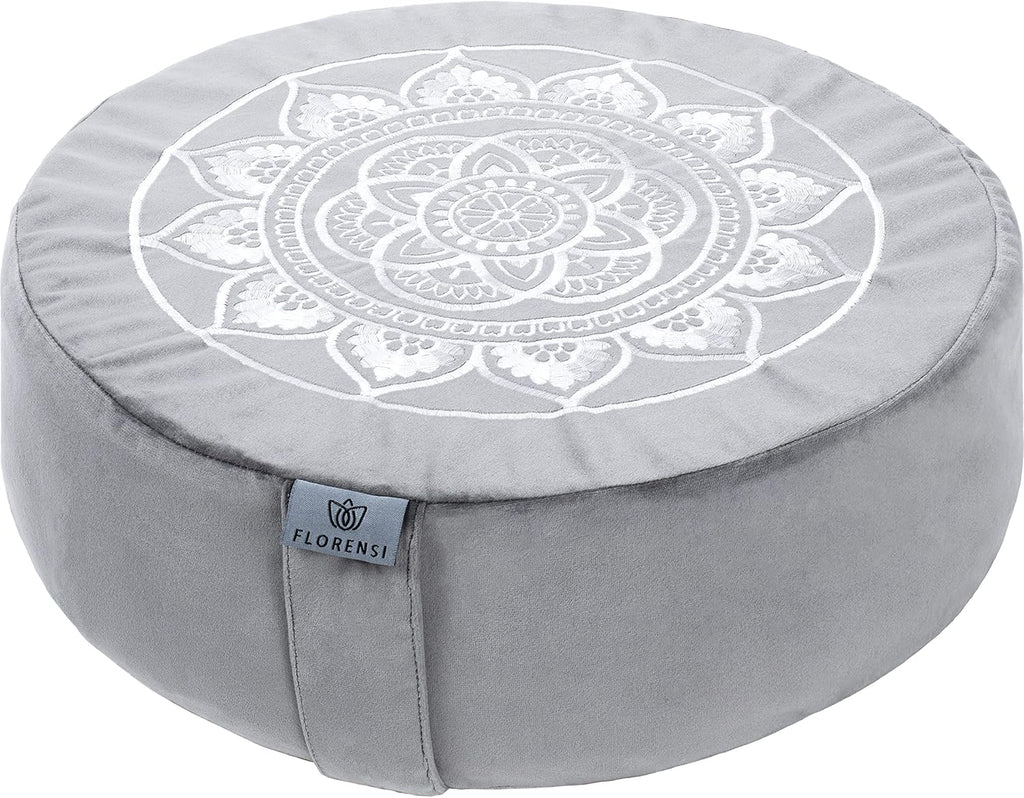
- Sit somewhere ordinary. A kitchen chair works as well as a cushion.
- If the mind wanders ten times in three minutes, that’s ten successful returns, not ten failures.
- Keep the closing phrase the same each day for the first week — repetition is what makes it land.
- Five minutes only. Resist the urge to extend it on Day 1; the short length is what makes it repeatable tomorrow.
This isn’t a technique reserved for hard days. The same five minutes that steadies a stressful morning also works as a plain, unremarkable start to an ordinary one — which is exactly when a daily practice actually takes root.
For a deeper look at what a slightly longer breath practice can do, the site’s 5 Minutes of Breath Awareness article walks through the same anchor in more depth, including what changes after consistent daily practice.
This is Day 1 of the free 7-Day Meditation Starter Guide — where modern neuroscience and the Buddha’s teachings meet in practical, everyday language, no background in Buddhism required.