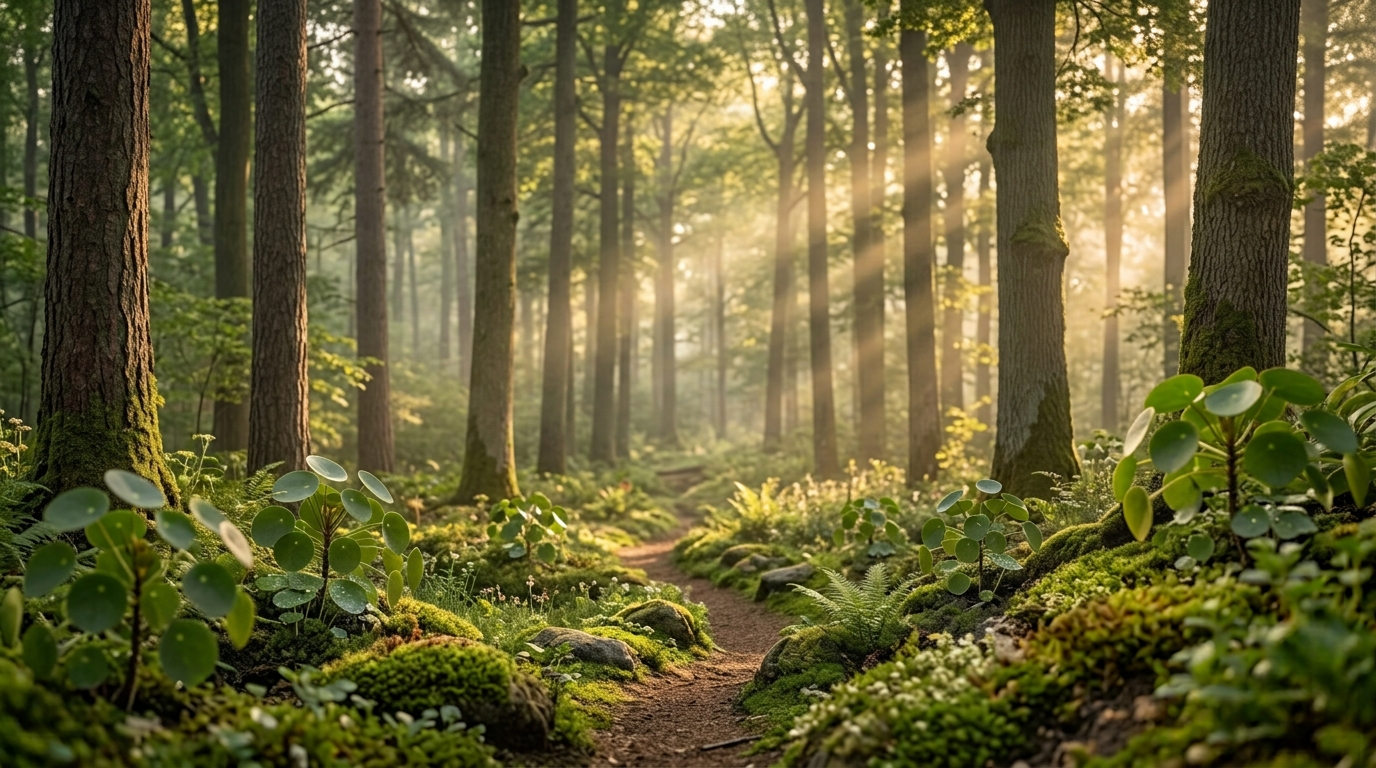
Forest bathing sounds like a wellness trend, but it is a plain idea with a Japanese name: shinrin-yoku, literally “taking in the forest atmosphere.” There is no swimming and no destination. You go into a wooded place, slow down, and let your senses do the work.
It is among the easiest forms of mindfulness to understand, because the forest keeps asking you to look, listen, and breathe.
What Research Says About Forest Bathing
A team led by Bum Jin Park, with Yuko Tsunetsugu, Tamami Kasetani, Takahide Kagawa, and Yoshifumi Miyazaki, published a field study in 2010 in the journal Environmental Health and Preventive Medicine. It involved 280 participants across 24 forests in Japan. Participants spent time in a forest area and in a city area, on separate days, and the researchers measured their bodies afterward.
The forest results were lower on every measure. Salivary cortisol, a stress hormone, was about 13.4 percent lower after viewing the forest and 15.8 percent lower after walking in it, compared with the city. Pulse rate was lower by about 6.0 percent after viewing and 3.9 percent after walking. Systolic and diastolic blood pressure were also lower, by roughly 2 percent.
The participants were young male university students in good health, and the visits were short, so the findings say little about older adults or long-term effects. Even so, a consistent drop across 24 different forests is a strong hint that the setting itself matters.
The Buddhist Source Behind This Practice
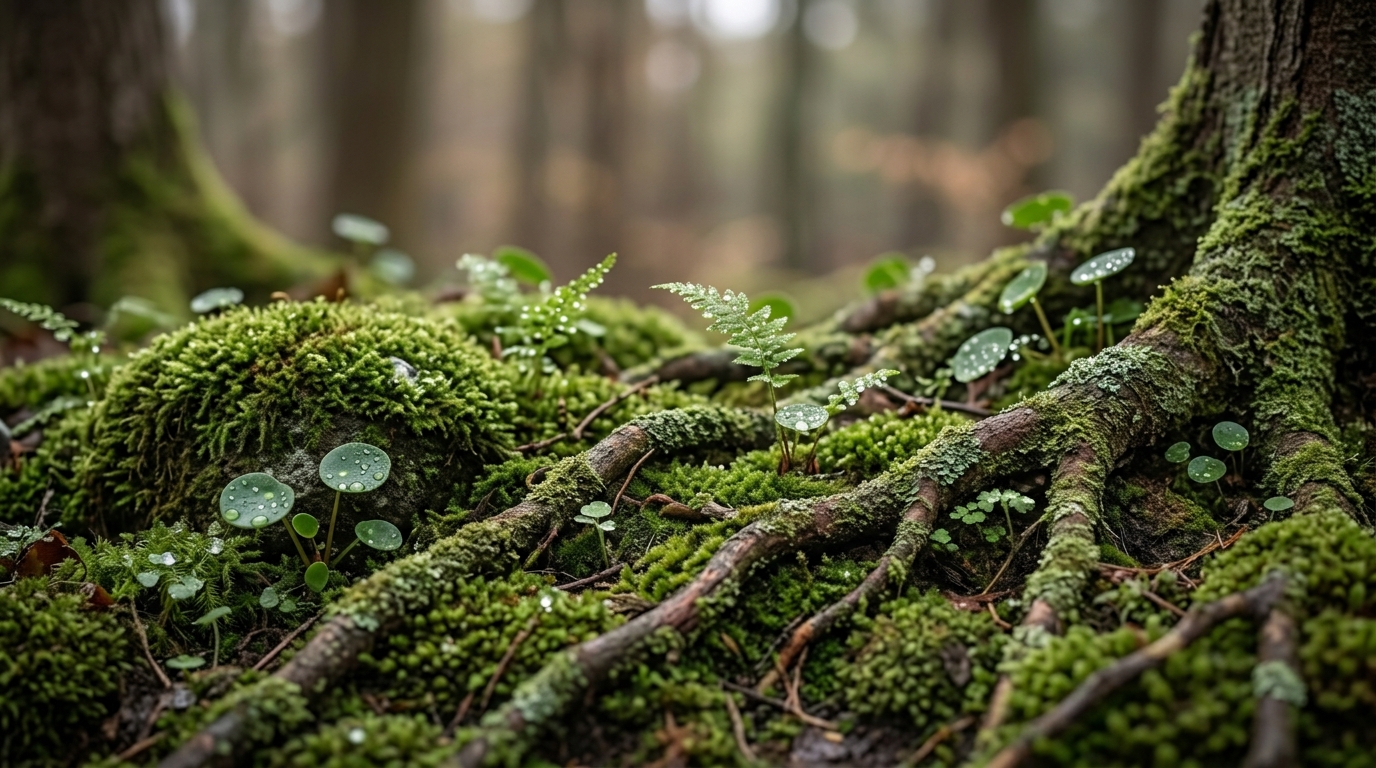
The Dhammapada, verses 98 and 99, speak about exactly this. Verse 98 says, in Acharya Buddharakkhita’s translation, that inspiring is the place where the awakened dwell, whether in a village, a forest, a vale, or on a hill. Verse 99 adds that the forests are inspiring because those who are free of craving find joy there, where others find none.
Buddhist tradition places many key moments of the Buddha’s life among trees, and forest dwelling has long been a monastic ideal. The teaching isn’t that forests are magic. It is that a quiet place with few demands gives the mind room to settle, and a settled mind finds the place beautiful.
How to Practice Forest Bathing
- Choose any green place. A forest is ideal, but a large park with old trees can serve the same purpose.
- Leave the phone in your bag. Silence or airplane mode lets the place be the focus.
- Walk slowly, with no goal. You are not trying to cover distance. Stop whenever something catches your attention.
- Use all five senses. Notice the smell of earth, the sound of leaves, the feel of bark, the light moving through branches.
- Sit for ten minutes. Find a spot, settle, and let the sounds of the place come and go.
- Take a bottle of water. Unhurried time outdoors is easier when you’re comfortable.
You don’t need a famous forest or a free weekend. One hour among trees, taken slowly, may be one of the cheapest ways to give the body a break from the noise of ordinary days.
For a quieter way to bring the same stillness indoors, see Silence Meditation.
This article is part of the Learn library at Buddhism with Maitreya Dharma, where modern neuroscience and the Buddha’s teachings meet in practical, everyday language — no background in Buddhism required.