Most people try to think their way out of stress and anxiety. They tell themselves to relax. They try to slow down. But the anxious feeling keeps coming back — because the problem is not in your head. It is in your nervous system.
There is a nerve running from your brain all the way down to your gut that acts like a built-in off switch for stress. Scientists call it the vagus nerve. When it is working well, you feel calm, clear, and grounded. When it is stuck in stress mode, you feel on edge and exhausted even when nothing is wrong. The good news: you can reset it. Here is how.
What Is the Vagus Nerve?
Your body has two main modes. The first is fight-or-flight — stress mode, where your heart races, your muscles tighten, and your brain narrows its focus to the nearest threat. The second is rest-and-digest — calm mode, where your heart slows, your digestion works, and your mind can think clearly.
The vagus nerve is the main control cable between your brain and your body that decides which mode you are in. It is the longest nerve in the entire body — running from the base of your skull, down through your neck, branching into your heart and lungs, and reaching all the way to your gut. That is why anxiety shows up as a tight chest, a racing heart, or a knotted stomach. Your body is all one connected system, and the vagus nerve is the wiring that links all of it.
Scientists measure how well your vagus nerve is working using something called heart rate variability (HRV) — the tiny natural variation between your heartbeats. A flexible, responsive HRV means your vagus nerve is healthy and strong. Low HRV is linked to chronic anxiety, depression, burnout, and even cardiovascular disease.
Why Your Vagus Nerve Gets Stuck in Stress Mode
Here is the problem with modern life: your brain cannot tell the difference between a genuine physical threat and a stressful email. Both trigger the same cascade — cortisol and adrenaline flood your system, and your rest-and-digest response shuts down.
When this happens once in a while, your body recovers easily. But when the stress response fires again and again — every workday, every evening, every time you check your phone — your vagus nerve slowly loses its flexibility. The calm switch becomes harder and harder to flip. That is why so many people describe themselves as “always anxious” or “never able to fully relax,” even during a vacation.
Science Insight
Research from the University of California found that people who practice slow, extended-exhale breathing for just 10 minutes a day show measurable increases in vagal tone within two weeks — reducing anxiety scores by up to 40%.
What the Research Shows
The vagus nerve is one of the most actively studied topics in modern neuroscience and psychiatry. Here is what researchers have found:
- A study published in Frontiers in Psychiatry found that slow, controlled breathing with an extended exhale significantly increases vagal tone and reduces anxiety symptoms — in some subjects within just a few minutes of practice.
- Research from UCLA showed that humming and low-frequency chanting activate the vagus nerve through vibrations in the throat — providing a physiological explanation for why “om” chanting has been used in meditation traditions for thousands of years.
- A 2018 study in PNAS (National Academy of Sciences) confirmed that cold water on the face triggers the diving reflex, a rapid vagal activation that slows heart rate dramatically and can interrupt a panic response within 30 to 60 seconds.
- Neuroscientist Dr. Stephen Porges developed Polyvagal Theory, which shows that the vagus nerve plays a central role not just in stress response, but in social connection, emotional regulation, and our sense of safety.
What the Buddha Taught About the Breath and the Nervous System
Here is what makes this all so remarkable: long before scientists could measure heart rate variability or map the vagus nerve, the Buddha had already systematized the practice of using the breath to calm the body and mind. The instructions survive intact in the Anapanasati Sutta (MN 118) — the Discourse on Mindfulness of Breathing — described by the scholar-monk Thanissaro Bhikkhu as containing the most detailed meditation instructions in the entire Pali Canon.
The Anapanasati Sutta teaches awareness of the breath in sixteen steps across four groups. The first group focuses entirely on the body: noticing whether the breath is long or short, calming the bodily fabrications, and becoming sensitive to the whole body through the breath. What the Buddha was describing was not a spiritual visualization — it was precise, systematic attention to the physical process of breathing. The result, as the Sutta describes, is passaddhi: tranquility of the body and the mental factors. This is exactly what researchers now observe as increased vagal tone and parasympathetic activation.
The extended exhale that modern neuroscience identifies as the mechanism of vagal activation is not a modern discovery. Breath awareness practices across the Theravada, Zen, and Tiantai traditions — all tracing directly to the Buddha’s instruction in the Anapanasati Sutta — emphasize slow, aware breathing with natural lengthening of the out-breath. Passaddhi arises in the exhale. The nervous system settles in the exhale. Both traditions are describing the same phenomenon from different angles.
The sustained hum or “ohm” sound used in some Buddhist chanting practices produces vibrations through the tissues surrounding the vagus nerve via the vagal branches in the throat and chest — a mechanism confirmed by research on auditory vagal stimulation. The practitioners who developed these techniques did so through thousands of hours of direct observation. Modern instrumentation has since confirmed what that observation produced.
5 Ways to Reset Your Vagus Nerve Right Now
None of these require any special equipment. They work because they send direct signals to your vagus nerve — signals your body already knows how to respond to.
1. Extend Your Exhale
Inhale for 4 seconds. Exhale slowly for 6 to 8 seconds. The long exhale is the key — it is the part of the breath that directly activates your rest-and-digest system. Do this for 5 to 10 breaths whenever you feel tense or anxious. You will feel the shift within a minute or two.
2. Hum or Chant
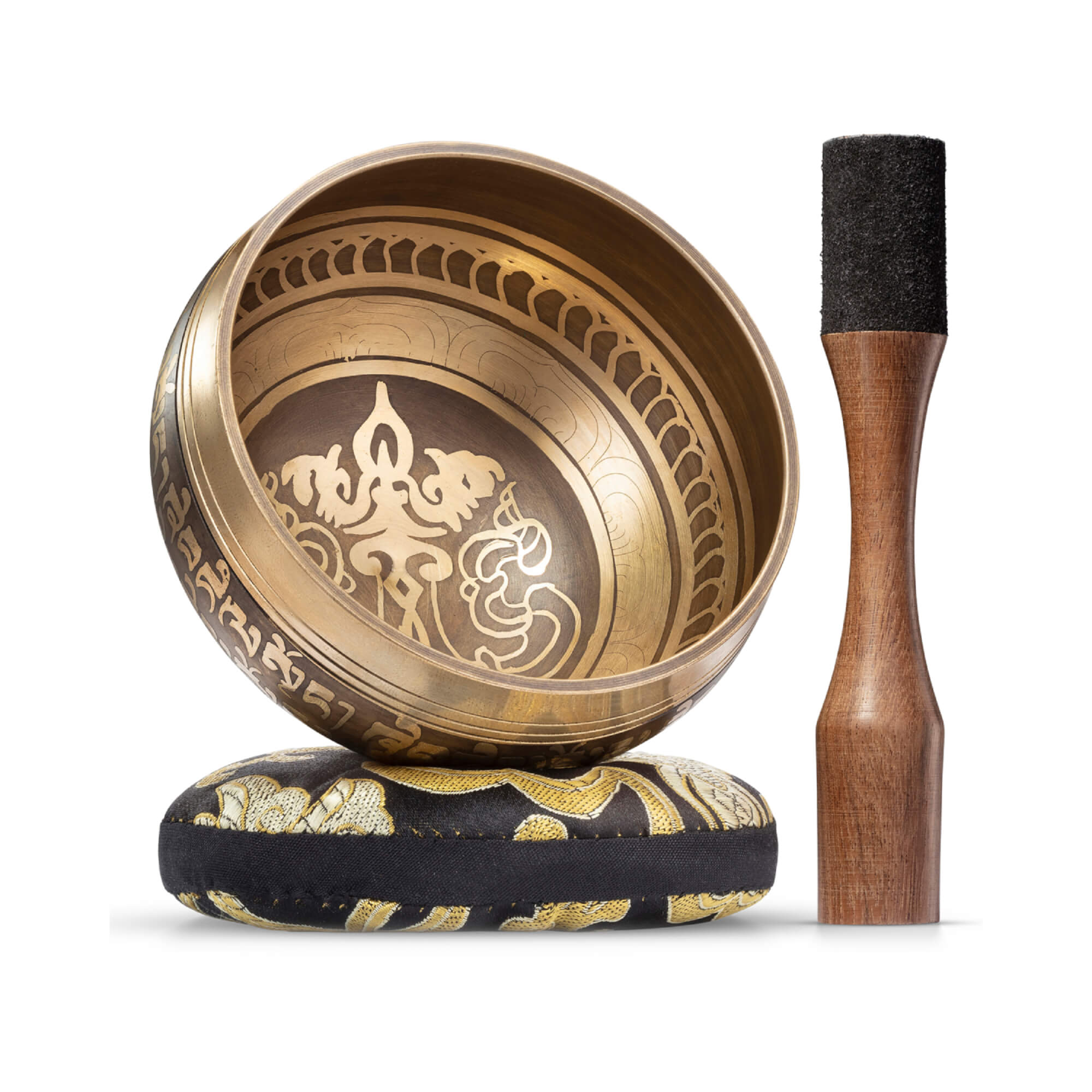
Humming sends vibrations through the tissues around your vagus nerve in your throat and chest. Even 2 to 3 minutes of quiet humming — or a slow, sustained “ohm” sound — can noticeably shift your nervous system state. This is one of the fastest reset techniques available because it directly stimulates the nerve through sound.
3. Cold Water on Your Face
Splashing cold water on your face or the back of your neck activates the diving reflex — a built-in survival response that rapidly slows the heart rate through your vagus nerve. This technique can interrupt a panic spike within 30 to 60 seconds and is especially useful when anxiety suddenly spikes.
4. Slow, Gentle Movement
Yoga, tai chi, gentle stretching, or a slow walk all help shift your nervous system out of stress mode. The key word here is slow. Intense exercise temporarily spikes cortisol. Slow, rhythmic movement — especially paired with steady breathing — activates the vagus nerve and deepens the calm response.
5. Safe Social Connection
According to Polyvagal Theory, your nervous system is constantly scanning its environment for signals of safety or threat. Genuine eye contact, a real smile, or physical contact with someone you trust sends a powerful “you are safe” signal through your social nervous system — which is directly connected to vagal function. This is one reason why isolation makes anxiety worse, and why connection helps.
The Bottom Line
Chronic anxiety and stress are not character flaws — they are signs that your nervous system is stuck in a pattern it was not designed to stay in forever. Your vagus nerve is your body’s built-in pathway back to calm, and it responds to remarkably simple inputs: a slow breath, a low hum, a splash of cold water, a genuine smile.
You do not need to “try harder to relax.” You need to give your nervous system the right signals.
Start today. Try the extended exhale right now — breathe in for 4 counts, breathe out for 8. Notice what happens in your body over the next few breaths. That feeling is your vagus nerve working exactly the way it was designed to.
For a more structured way to practice this, Box Breathing walks through the 4-4-4-4 technique used by Navy SEALs to steady the nervous system on command.
This guided meditation and article are part of the Learn library at Buddhism with Maitreya Dharma, where modern neuroscience and the Buddha’s teachings meet in practical, everyday language — no background in Buddhism required.