
Dishes are the chore nobody puts on a wish list. They show up three times a day, they are never finished, and most of us rush through them with a podcast in our ears and our minds somewhere else entirely. Mindful dishwashing is the practice of doing that same task with your attention in the room, on purpose, for the few minutes it takes.
It needs no cushion, no timer, and no extra time. The sink is already waiting.
What Research Says About Mindful Dishwashing
A team led by Adam Hanley and colleagues at Florida State University, published in the journal Mindfulness, tested this idea directly. Fifty-one university students were randomly assigned to wash dishes under one of two sets of instructions: one group was guided to wash mindfully, paying attention to the experience itself, while the other received instructions on the correct way to wash dishes.
Afterward, the mindful group reported greater mindfulness than the control group. They also reported less nervousness and more mental inspiration.
It is worth keeping the limits in view. The participants were students, the task was a single short session, and the results were self-reported, so this is a small, early finding and not proof of a lasting effect. But it supports something simple: the same ordinary task can feel different depending on where your attention sits while you do it.

The Buddhist Source Behind This Practice
The Satipatthana Sutta (Majjhima Nikaya 10), the Buddha’s central teaching on mindfulness, describes applying clear comprehension to ordinary movement: in going forward and back, in looking ahead and away, in eating, drinking, chewing, and savoring. Washing dishes is not named in the list, but the principle is exactly the same. Everyday actions are not a break from the practice. They are the practice.
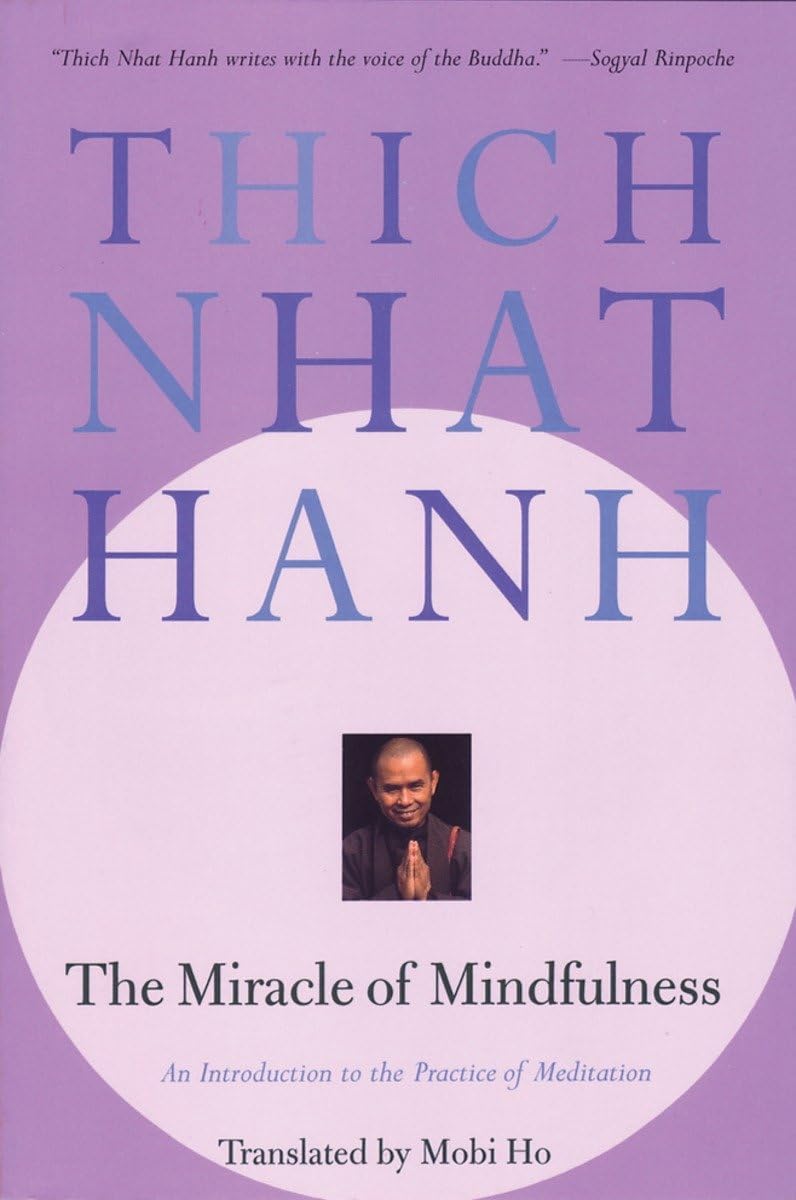
The Vietnamese Zen teacher Thich Nhat Hanh made this famous with a single question in The Miracle of Mindfulness: who is washing the dishes? If you wash a bowl only to get to the next thing, you are not really there, and the time becomes something to endure. If you wash it simply to wash it, the time is yours.
How to Practice Mindful Dishwashing
- Start with one pot or one bowl. Don’t turn it into a big project. A single dish is enough to begin.
- Put the phone and the podcast away. Let the sounds of the kitchen be the soundtrack for a few minutes.
- Feel the water. Notice its temperature on your hands, the slickness of the soap, and the weight of the dish.
- Take one slow breath before you start. It marks the moment as different from the rush before it.
- When the mind wanders, return to your hands. That return is the whole exercise, and it counts every time you do it.
- Finish with a pause. When the last dish is in the rack, stand for one breath and look at what you’ve done.
Mindful dishwashing won’t make the dishes disappear. What it can do is turn one of the least loved minutes of the day into a small, reliable pause, three times a day, with nothing extra to buy and nowhere extra to go.
If you’d like to bring the same attention to the table, read Mindful Eating and Tea Meditation.
This article is part of the Learn library at Buddhism with Maitreya Dharma, where modern neuroscience and the Buddha’s teachings meet in practical, everyday language — no background in Buddhism required.